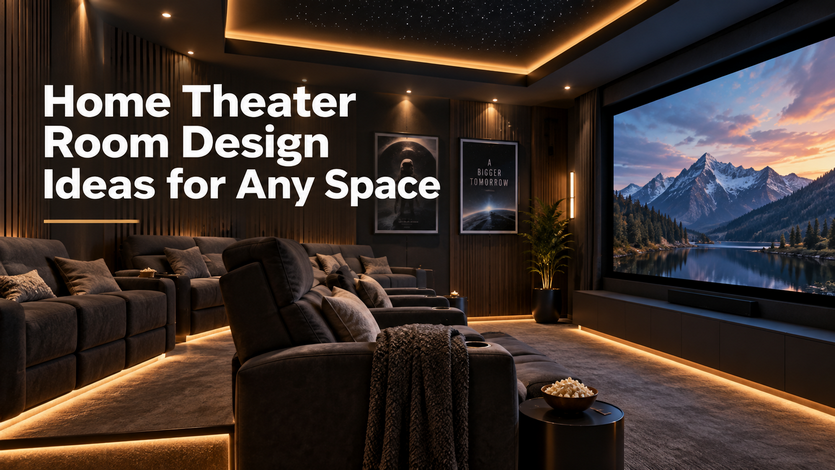
The right home theater design depends far more on the space you're starting with than on a fixed layout — a finished basement, a converted spare bedroom, and an open-concept media room each call for different decisions around seating, screen size, and light control. There isn't one universal blueprint, but there is a consistent set of questions worth answering before choosing furniture or equipment.
Basement Theaters: The Natural Fit
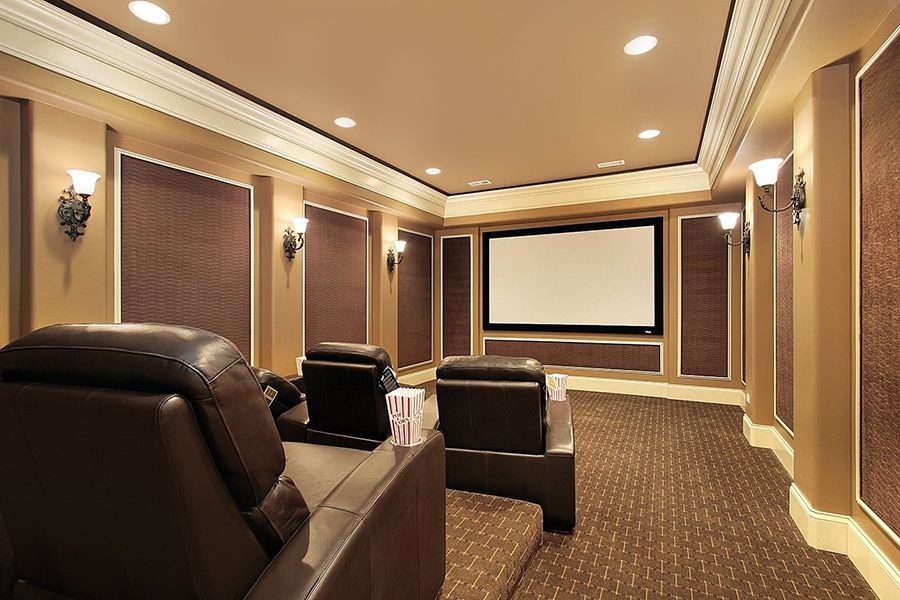
Basements tend to make excellent dedicated theaters because they're already dark, separated from the rest of the house's noise and daylight, and typically have fewer windows to manage. The main design considerations are ceiling height (low ceilings limit screen size and seating riser options), moisture control (especially in older homes), and running enough electrical and network wiring before drywall goes up, since retrofitting a finished basement later is far more disruptive.
Dedicated Media Rooms: Built for One Purpose
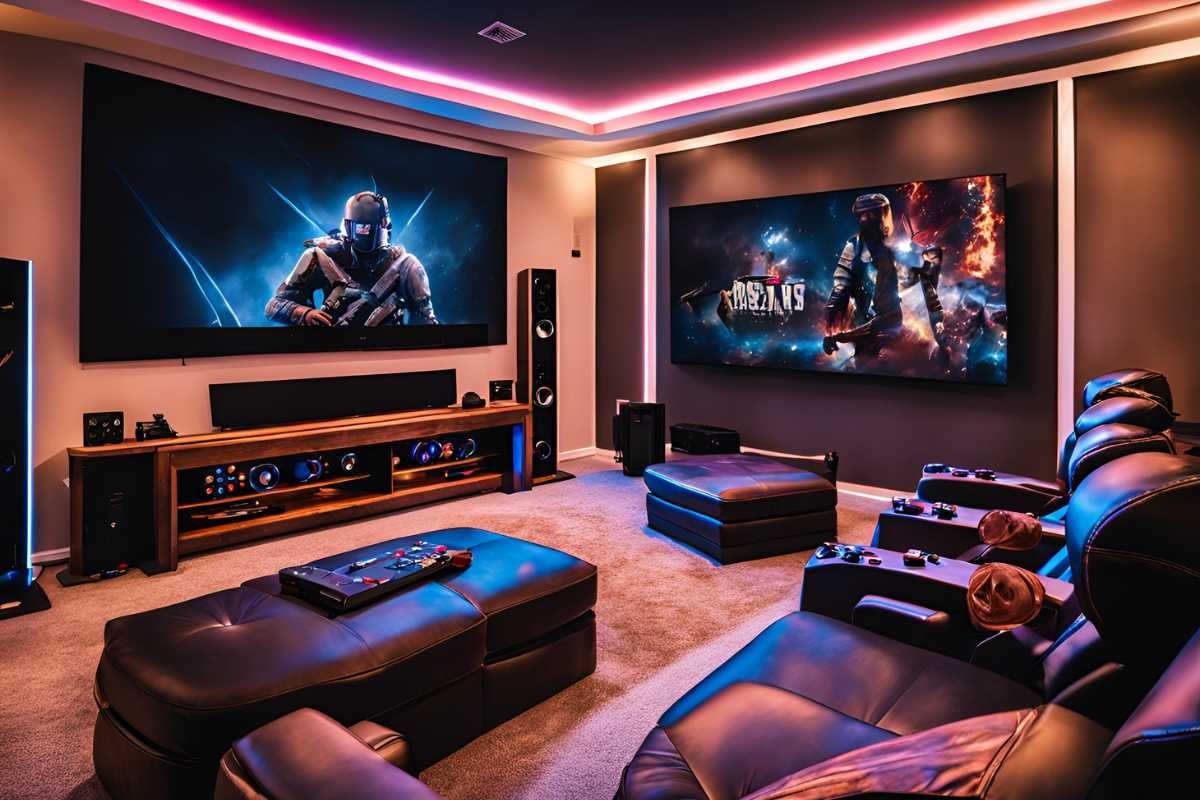
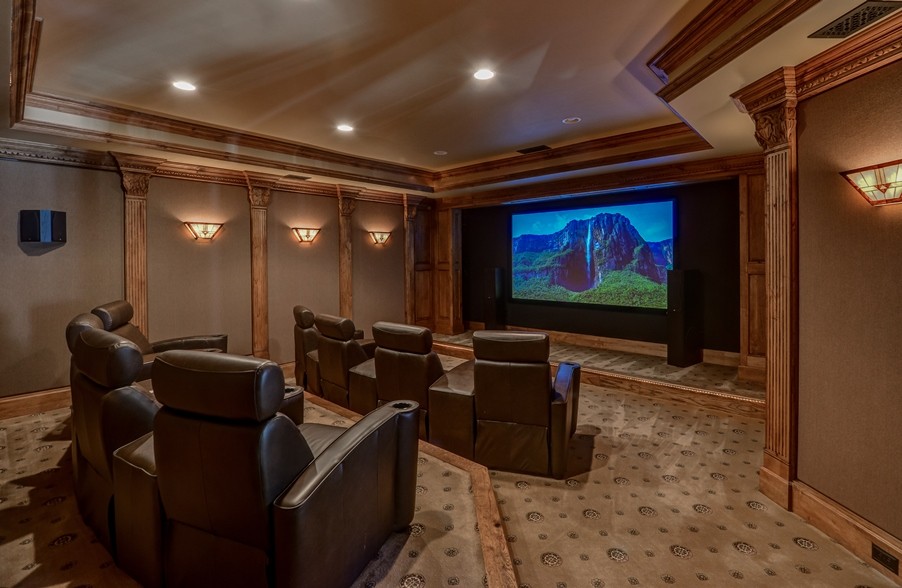
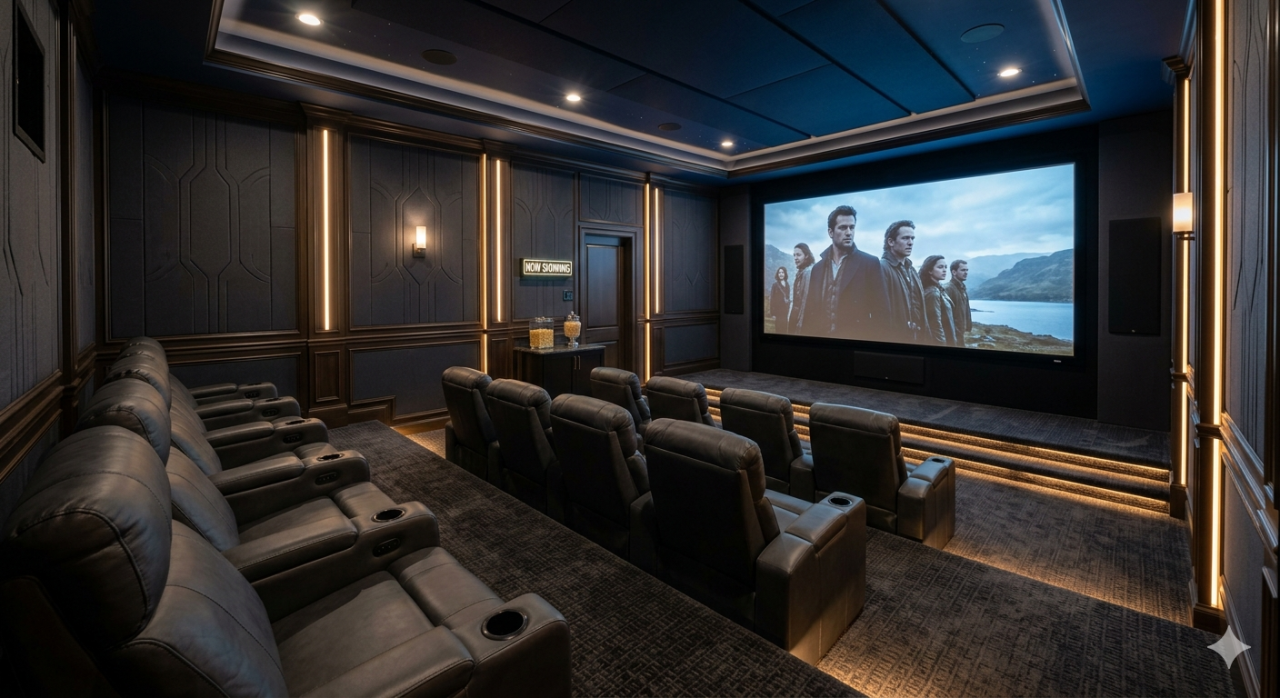
A dedicated theater room — a space used exclusively for movies and not doubling as an office or playroom — allows for the most control: tiered seating, full light-blocking treatments, dark wall colors and ceilings to reduce glare on the screen, and acoustic treatment without worrying about how it looks for other uses. This is typically the setup people picture when they think "home theater," but it requires a room the household is willing to dedicate entirely to that purpose.
Multi-Use Media Rooms: Designing Around Compromise
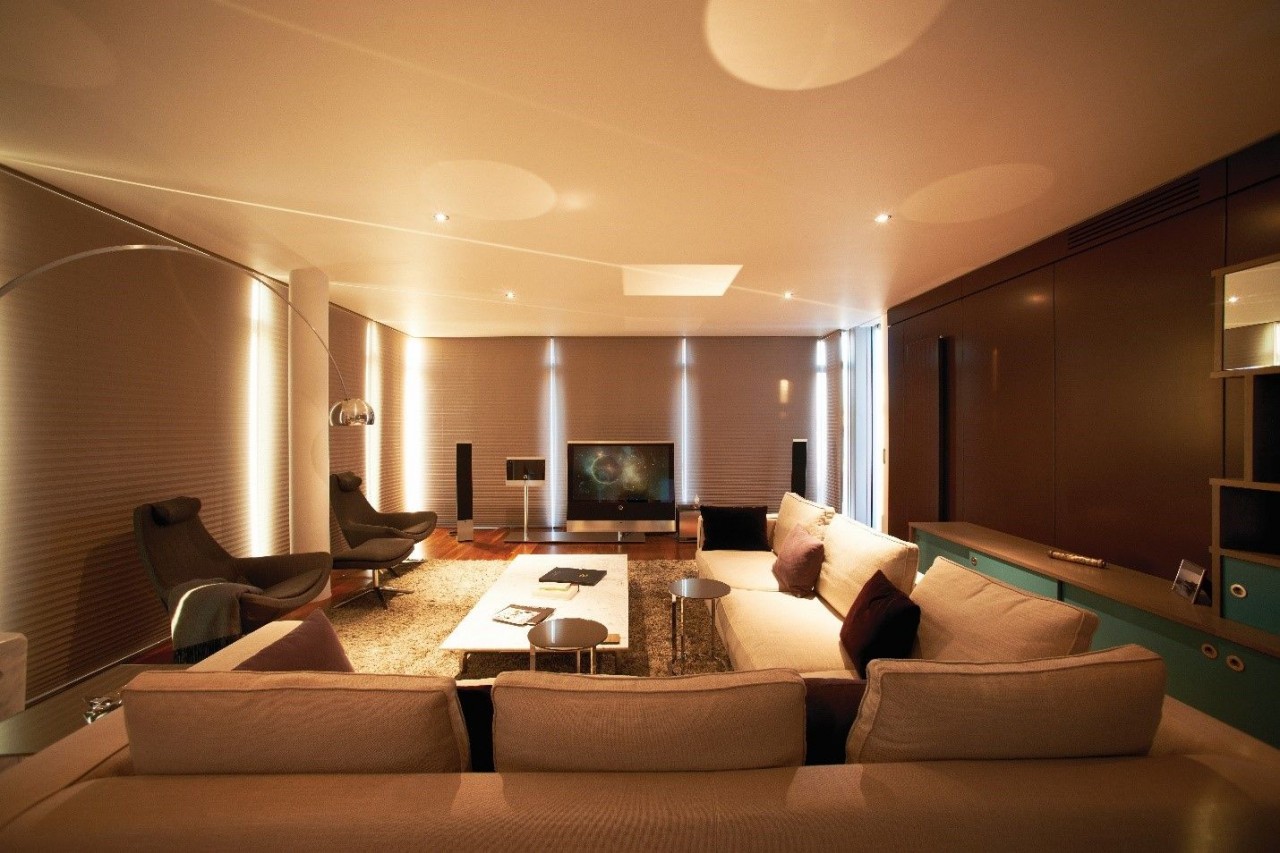
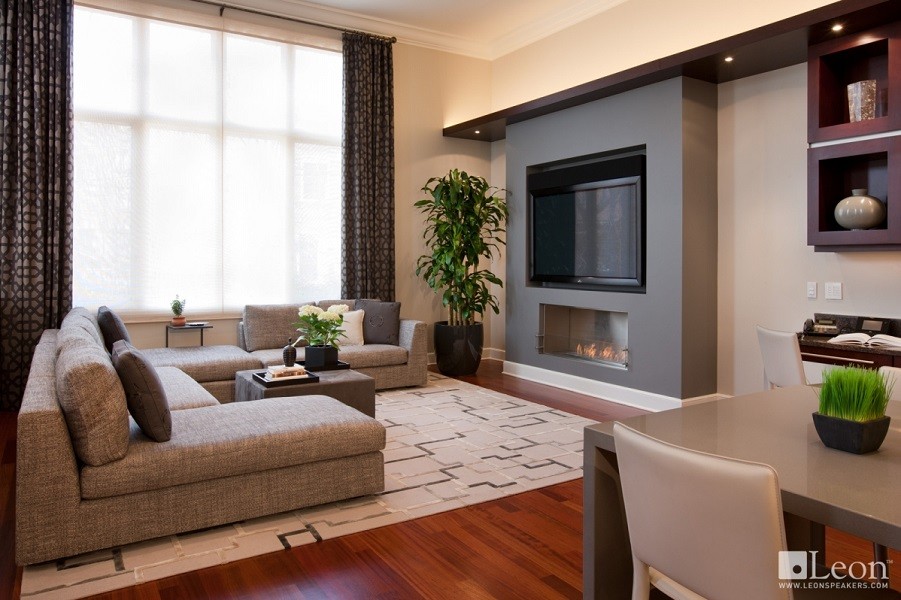
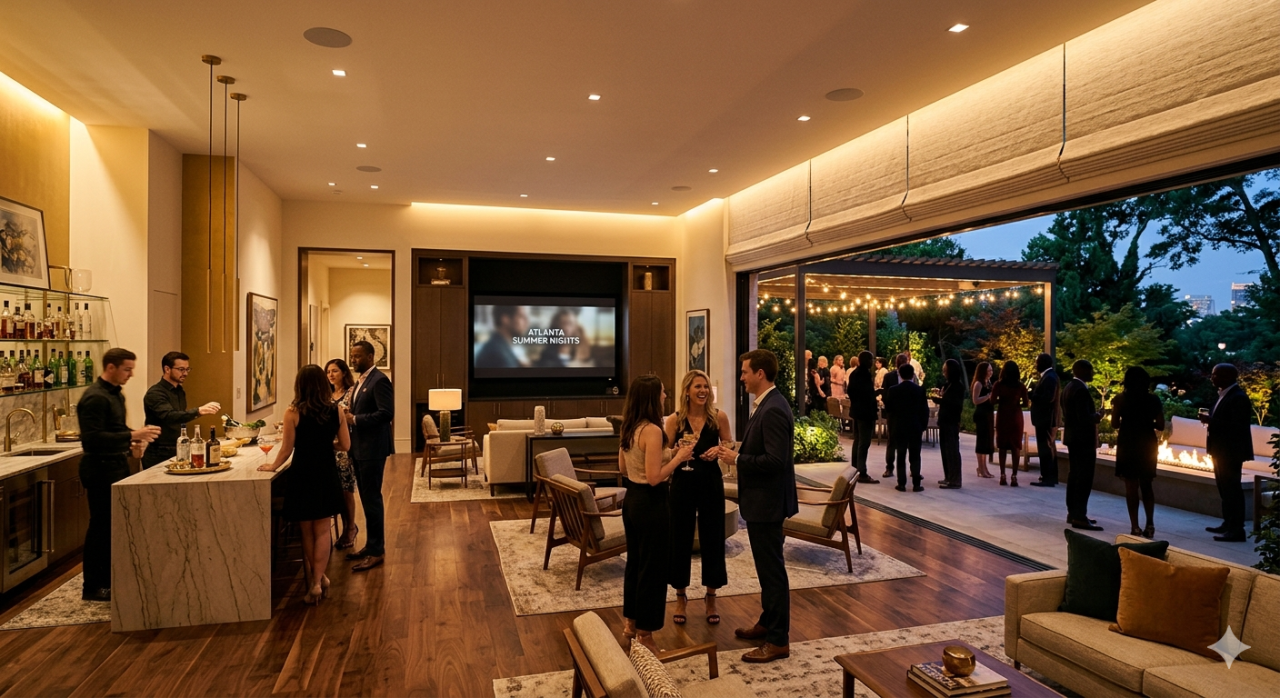
Many households don't have a room to spare exclusively for movies, and design a media room that also functions as a family room, playroom, or guest space. This works well with a few adjustments: motorized shades instead of blackout curtains (so the room can shift from bright and functional to dark and theater-ready in seconds), furniture that doubles as flexible seating rather than fixed theater recliners, and a screen or TV that looks intentional in the room's everyday design rather than dominating it.
Screen Size and Seating Distance
Screen size should be chosen based on how far the primary seating is from the screen, not room size alone. A general starting point is that seating distance should be roughly 1.5 to 2.5 times the screen's diagonal size for a comfortable, immersive view without straining to take in the whole picture. Rooms with shorter throw distances often do better with a large TV than a projector screen, since projectors typically need more distance to fill a screen properly.