Call us to schedule a consultation! 770-977-9110 


Deprecated: Using ${var} in strings is deprecated, use {$var} instead in /home/mrpoatlantaaudio/public_html/administrator/components/com_easyblog/includes/stylesheet/compilers/lessc.php on line 1343

Deprecated: Using ${var} in strings is deprecated, use {$var} instead in /home/mrpoatlantaaudio/public_html/administrator/components/com_easyblog/includes/stylesheet/compilers/lessc.php on line 1689

Deprecated: Using ${var} in strings is deprecated, use {$var} instead in /home/mrpoatlantaaudio/public_html/administrator/components/com_easyblog/includes/stylesheet/compilers/lessc.php on line 1689

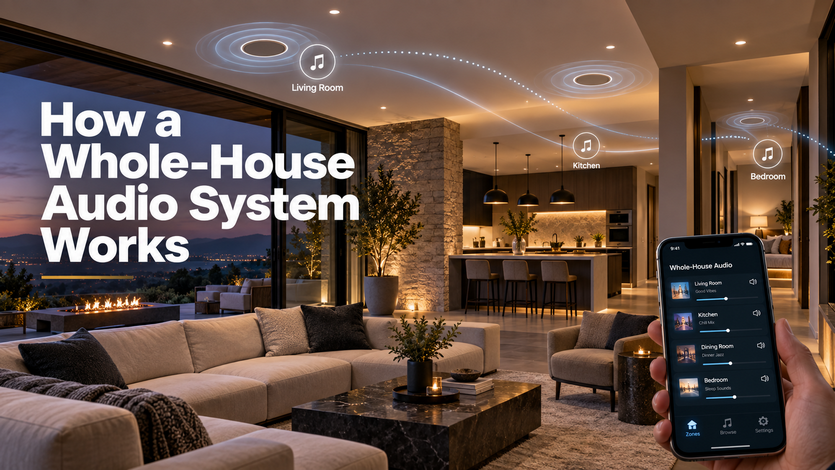
How a Whole-House Audio System Works

How-a-Whole-House-Audio-System-Works

A whole-house audio system lets you play music (or different music) in multiple rooms at once, controlled from your phone or a wall panel, using speakers wired into each room and tied back to a central set of amplifiers. The core idea is simple — every room is its own "zone" that can play the same source as the rest of the house or something completely different.

The Three Parts of Every System

Every whole-house audio setup, regardless of brand, is built from the same three pieces: speakers in each room (in-ceiling, in-wall, or outdoor), a matrix amplifier or set of amps that power those speakers and route audio to the right zones, and a control system — an app, wall keypad, or voice assistant — that lets you choose what plays where.

The amplifier is doing more work than people expect. It's not just powering the speakers; it's the switchboard deciding whether the kitchen zone gets the same Spotify playlist as the living room, or its own separate source entirely.

What "Zones" Actually Means

A zone is any area with independent volume and source control — usually a room, but sometimes a smaller area like a home office or a larger one like an entire outdoor patio. The number of zones in a house is a design decision, not a fixed number: a two-story home might have eight zones (four bedrooms, kitchen, living room, patio, garage) or as few as three if the homeowner only wants music in the main living spaces.

More zones mean more flexibility but also more wiring and a bigger amplifier — this is usually where cost scales, not the speakers themselves.

Continue reading

Deprecated: Creation of dynamic property EasyBlogSocialButtonExternal::$post is deprecated in /home/mrpoatlantaaudio/public_html/administrator/components/com_easyblog/includes/socialbuttons/adapters/external.php on line 42

Lighting Control Systems: What They Are and Why You Want One

lighting control system

A lighting control system replaces individual light switches and dimmers with a connected setup that lets you control every light in the house from an app, wall keypad, or voice command — individually or in coordinated groups called "scenes." The real value isn't turning lights on remotely; it's setting up lighting once, the way you actually want it, and having it repeat reliably without walking around adjusting six different switches.

Scenes: The Feature Most People Actually Want

A scene is a saved combination of lighting levels across multiple rooms or fixtures, triggered with one command instead of adjusting each light individually. A "movie night" scene might dim the living room to 20 percent, turn off the kitchen lights entirely, and bring up a soft glow in the hallway — all from pressing one button or saying one phrase. This is the feature that tends to sell people on lighting control once they've actually used it, because it replaces a multi-step routine with a single action.

Scheduling: Lighting That Works Without You

Scheduled lighting can turn porch and pathway lights on at sunset and off at sunrise automatically, adjusting the actual time daily rather than relying on a fixed clock schedule that drifts out of sync with the season. Interior lights can be scheduled to give the appearance of an occupied home while traveling, using randomized timing rather than the exact same lights turning on at the exact same minute every night, which is a more convincing pattern.

Dimming: More Than Just Lower Brightness

Proper dimming does more than reduce a light's intensity — quality dimmers (like Lutron's) are engineered to dim smoothly across the full range without the flickering or buzzing that cheaper dimmers can cause, especially with LED bulbs, which are more sensitive to dimmer compatibility than older incandescent bulbs. This is a common source of frustration in DIY lighting upgrades: a dimmer that isn't matched properly to LED fixtures can cause visible flicker or a limited, uneven dimming range.

Keypads vs. Apps vs. Voice: Picking the Right Control for Each Room

The most effective lighting systems don't rely on a single control method everywhere. Wall keypads work best in main rooms where guests and every household member need simple, reliable access without opening an app. Apps are useful for full-house control, adjusting scenes remotely, or checking whether lights were left on. Voice control fits well for quick, single-room adjustments — "dim the living room" — but isn't always practical for coordinating a full multi-room scene.

Continue reading

Deprecated: Creation of dynamic property EasyBlogSocialButtonExternal::$post is deprecated in /home/mrpoatlantaaudio/public_html/administrator/components/com_easyblog/includes/socialbuttons/adapters/external.php on line 42

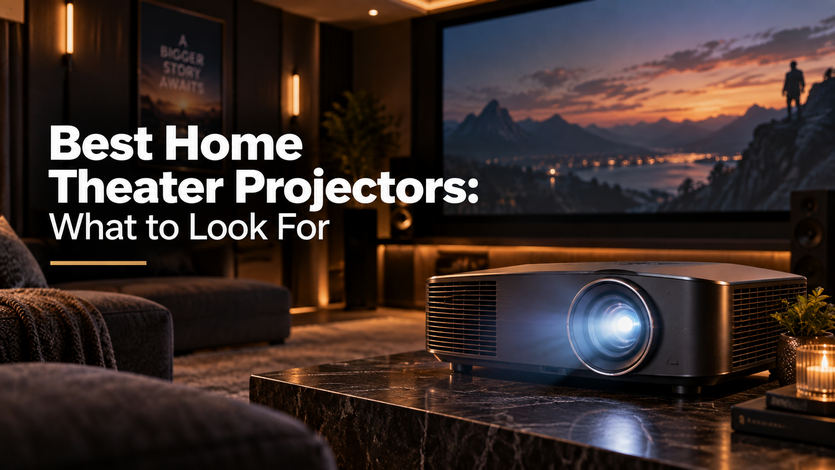
Best Home Theater Projectors: What to Look For

best home theater projector 2026

The best home theater projector for your room is determined by three things: how much ambient light the room lets in, how far the projector will sit from the screen, and what size image you want — not by picking whatever tops a "best of" list. A projector that performs beautifully in a fully dark, dedicated theater can look washed out and disappointing in a room with even moderate daylight.

Brightness (Lumens) Should Match Your Room, Not a Spec Sheet

Lumens measure how bright a projector's image is, and the right number depends entirely on ambient light. A room that can be fully darkened — blackout shades, no windows, or used mainly at night — can perform well with a projector in the 1,500–2,500 lumen range. A room with some daylight or ambient light that can't be fully blocked needs significantly more brightness, often 3,000 lumens or higher, to avoid a dim, washed-out picture.

Contrast Ratio: The Number That Matters More Than People Realize

Contrast ratio — the difference between the darkest black and brightest white a projector can produce — has a bigger effect on perceived picture quality than raw brightness. Two projectors with similar lumen counts can look completely different side by side if one has significantly better contrast; low-contrast projectors tend to produce grayish, flat-looking blacks instead of true dark tones, which is especially noticeable during dim or nighttime movie scenes.

Throw Distance: Measure Before You Shop

Throw distance is how far the projector needs to sit from the screen to produce a given image size, and it varies significantly between models. Standard-throw projectors need more room depth, short-throw models can sit close to the screen (useful for smaller rooms), and ultra-short-throw projectors can sit directly beneath the screen, which works well when a coffee table or low furniture would otherwise block a standard mount position. Measuring the actual room before shopping avoids buying a projector that simply can't be mounted where the room allows.

Resolution: 4K Is Standard, but Not the Only Factor

Most current home theater projectors offer 4K resolution, which is now the practical baseline rather than a premium upgrade. At this point, the differentiator between similarly priced projectors is less about resolution and more about brightness, contrast, and color accuracy — three projectors can all be labeled "4K" and still look noticeably different from one another.

Continue reading

Deprecated: Creation of dynamic property EasyBlogSocialButtonExternal::$post is deprecated in /home/mrpoatlantaaudio/public_html/administrator/components/com_easyblog/includes/socialbuttons/adapters/external.php on line 42

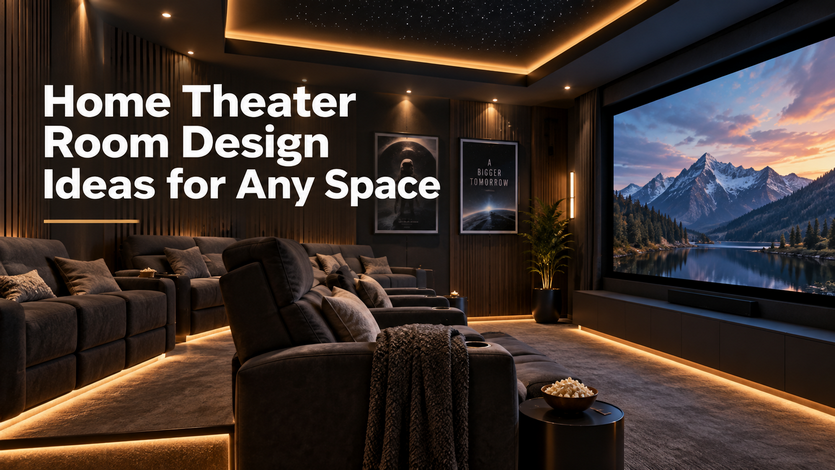
Home Theater Room Design Ideas for Any Space

home theater room design ideas

The right home theater design depends far more on the space you're starting with than on a fixed layout — a finished basement, a converted spare bedroom, and an open-concept media room each call for different decisions around seating, screen size, and light control. There isn't one universal blueprint, but there is a consistent set of questions worth answering before choosing furniture or equipment.

Basement Theaters: The Natural Fit

Basements tend to make excellent dedicated theaters because they're already dark, separated from the rest of the house's noise and daylight, and typically have fewer windows to manage. The main design considerations are ceiling height (low ceilings limit screen size and seating riser options), moisture control (especially in older homes), and running enough electrical and network wiring before drywall goes up, since retrofitting a finished basement later is far more disruptive.

Dedicated Media Rooms: Built for One Purpose

A dedicated theater room — a space used exclusively for movies and not doubling as an office or playroom — allows for the most control: tiered seating, full light-blocking treatments, dark wall colors and ceilings to reduce glare on the screen, and acoustic treatment without worrying about how it looks for other uses. This is typically the setup people picture when they think "home theater," but it requires a room the household is willing to dedicate entirely to that purpose.

Multi-Use Media Rooms: Designing Around Compromise

Many households don't have a room to spare exclusively for movies, and design a media room that also functions as a family room, playroom, or guest space. This works well with a few adjustments: motorized shades instead of blackout curtains (so the room can shift from bright and functional to dark and theater-ready in seconds), furniture that doubles as flexible seating rather than fixed theater recliners, and a screen or TV that looks intentional in the room's everyday design rather than dominating it.

Screen Size and Seating Distance

Screen size should be chosen based on how far the primary seating is from the screen, not room size alone. A general starting point is that seating distance should be roughly 1.5 to 2.5 times the screen's diagonal size for a comfortable, immersive view without straining to take in the whole picture. Rooms with shorter throw distances often do better with a large TV than a projector screen, since projectors typically need more distance to fill a screen properly.

Continue reading

Deprecated: Creation of dynamic property EasyBlogSocialButtonExternal::$post is deprecated in /home/mrpoatlantaaudio/public_html/administrator/components/com_easyblog/includes/socialbuttons/adapters/external.php on line 42

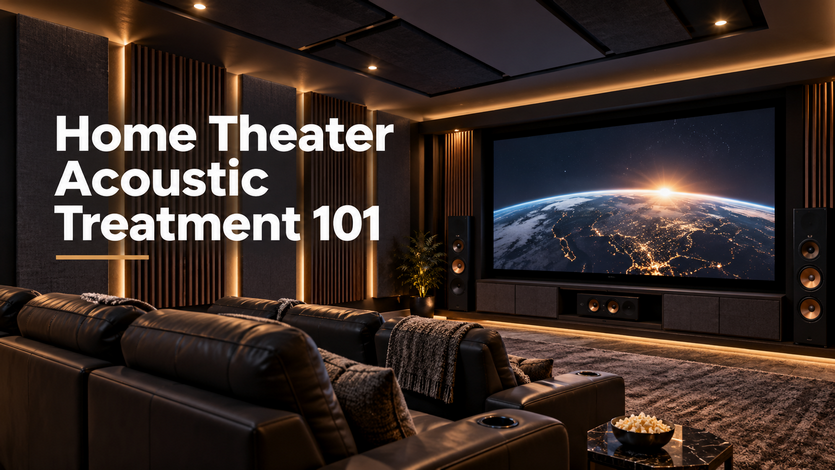
Home Theater Acoustic Treatment 101

Home-Theater-Acoustic-Treatment-101

Acoustic treatment is what stops a home theater from sounding boomy, echoey, or muddy — it's a set of materials placed strategically around the room that absorb, diffuse, or trap specific sound frequencies before they bounce around and distort what you're hearing. Even the best speakers can sound disappointing in an untreated room; treatment is what lets them perform the way they were designed to.

Why an Expensive System Can Still Sound Bad

Sound doesn't travel in a straight line from the speaker to your ears — it bounces off walls, ceilings, and floors, arriving at slightly different times and creating interference. In a room full of hard, parallel surfaces (drywall, glass, hardwood floors), this creates echo, muddiness in dialogue, and bass that sounds boomy in one seat and thin in another. This has nothing to do with speaker quality and everything to do with how the room handles sound.

Acoustic Panels: Taming Reflections

Acoustic panels are the flat, fabric-wrapped foam or fiberglass boards most people picture when they think "soundproofing," though their real job isn't blocking sound — it's absorbing mid and high-frequency reflections so dialogue stays clear instead of getting washed out by echo. The most effective placement is at "first reflection points" — the spots on the side walls and ceiling where sound from the speakers would first bounce back toward the listening position.

Bass Traps: The Most Skipped, Most Important Piece

Low frequencies behave differently than the rest of the audio spectrum — they build up in room corners, creating boomy or uneven bass depending on where you're sitting. Bass traps are thicker acoustic panels, usually placed in the corners of a room (including where walls meet the ceiling), specifically designed to absorb these low frequencies. Rooms with acoustic panels but no bass traps often still sound "off" in a way that's hard to pinpoint — usually it's untreated bass buildup.

Diffusion: Spreading Sound Instead of Absorbing It

Absorption (panels and bass traps) removes sound energy from the room. Diffusion, using textured panels that scatter reflections in multiple directions instead of absorbing them, keeps a room from sounding overly "dead" or flat, which can happen if a room is treated with too much absorption alone. Diffusers are typically used on the back wall behind the seating, preserving some natural spaciousness in the sound rather than a totally sealed, sound-booth feel.

Continue reading

Deprecated: Creation of dynamic property EasyBlogSocialButtonExternal::$post is deprecated in /home/mrpoatlantaaudio/public_html/administrator/components/com_easyblog/includes/socialbuttons/adapters/external.php on line 42

Outdoor Speakers for Your Patio: A Buyer's Guide

Outdoor-Speakers-for-Your-Patio


Good outdoor patio speakers need to survive real weather, cover the space evenly without a "hot spot" right under the speaker, and ideally let you control volume separately from whatever's playing indoors. Getting all three right depends less on brand and more on weatherproofing, placement, and how the zone is wired.

Weatherproofing: Know What You're Actually Buying

Not every speaker labeled "outdoor" is built for the same conditions. Look for an IP rating — the number after "IP" indicates protection against dust and moisture, and for a covered patio, IP54 is usually enough, while a speaker exposed to direct rain or installed near a pool should carry IP65 or higher. Materials matter too: speakers with foam or fabric grilles tend to degrade faster in humidity than ones built with UV-resistant plastic or powder-coated aluminum housings.

Temperature swings are the other factor people overlook. Atlanta summers push outdoor electronics hard, and a speaker rated for occasional damp conditions but not sustained heat can fail within a season or two.

Placement: Coverage Over Volume

The instinct is to buy two large speakers and mount them on either end of the patio. In practice, four smaller speakers spread around the space almost always sound better and more even than two big ones — you avoid the "loud right here, silent ten feet away" problem that comes with under-covering a large outdoor area.

Continue reading

Deprecated: Creation of dynamic property EasyBlogSocialButtonExternal::$post is deprecated in /home/mrpoatlantaaudio/public_html/administrator/components/com_easyblog/includes/socialbuttons/adapters/external.php on line 42

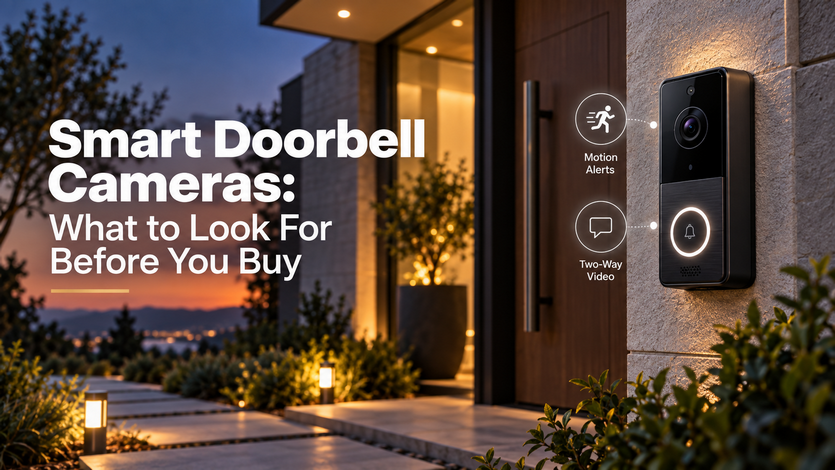
Smart Doorbell Cameras: What to Look For Before You Buy

Smart-Doorbell-Cameras


A smart doorbell camera should show you a clear, wide view of your entire porch — not just a narrow strip of the person's face — and it should tell the difference between a delivery driver and a passing car without buzzing your phone every few minutes. Beyond that, the features that matter most are field of view, video quality after dark, and how well it plays with the rest of your home's systems.

Most doorbell cameras on the shelf look similar from the outside. The differences that actually affect day-to-day use show up in the specs and, more often, in how the installation is done.

Field of View: Wider Is Almost Always Better

A doorbell camera mounted at standard height with a narrow field of view (under 140 degrees) tends to miss packages left to the side of the door, cars pulling into the driveway, or anyone standing just outside the frame. Look for a field of view of 160 degrees or wider, and pay attention to whether the camera captures head-to-toe video or just a face — head-to-toe framing is far more useful if you ever need to identify someone.

Night Vision and Color Accuracy

Most package theft and doorstep activity happens after dark, so night performance matters more than daytime image quality. Cheaper doorbell cameras rely on black-and-white infrared night vision, which is fine for basic detection but nearly useless for identifying details like clothing color. Better units use a small spotlight or color night vision, giving you a usable color image even at night.

Continue reading

Deprecated: Creation of dynamic property EasyBlogSocialButtonExternal::$post is deprecated in /home/mrpoatlantaaudio/public_html/administrator/components/com_easyblog/includes/socialbuttons/adapters/external.php on line 42

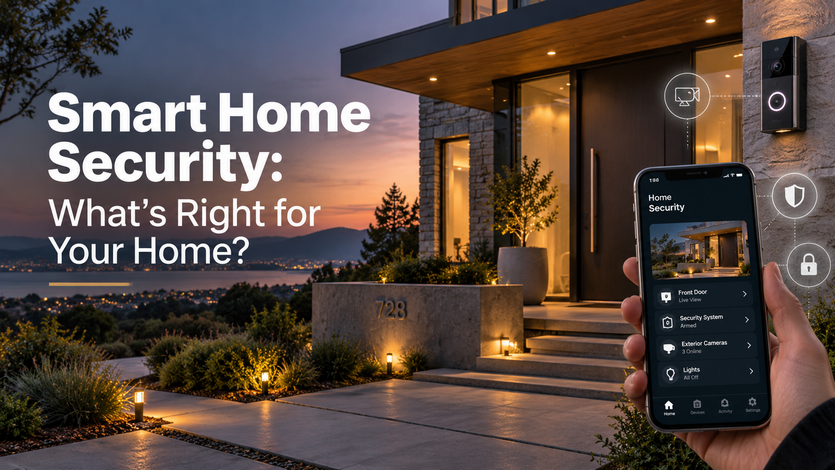
Smart Home Security: What's Right for Your Home?

Smart-Home-Security-Whats-Right-for-Your-Home


A smart home security system combines cameras, door and window sensors, and a central control panel so you can see and respond to activity at your property from your phone, whether you're upstairs or across town. The right setup for your house depends on how many entry points you have, how much of the property you want covered, and whether you want security tied into the rest of your smart home.

Most homeowners start shopping for "a security system" and quickly discover there isn't one single product — it's a combination of a few different pieces working together. Here's how they fit.

The Three Building Blocks

Cameras give you eyes on the property — the front door, the driveway, the backyard, and any entrance you can't see from inside the house. Sensors tell you when a door or window opens, when motion is detected in a room, or when glass breaks, even if no camera is pointed at that spot. The control panel and monitoring tie it all together, deciding what triggers an alert, a siren, or a call to a monitoring center.

Skipping any one of the three usually means a gap. Cameras alone won't tell you a side window was forced open if it's out of frame. Sensors alone won't show you who's at the door. A system that uses all three is what most integrators mean when they say "whole-home security."

Continue reading

Deprecated: Creation of dynamic property EasyBlogSocialButtonExternal::$post is deprecated in /home/mrpoatlantaaudio/public_html/administrator/components/com_easyblog/includes/socialbuttons/adapters/external.php on line 42

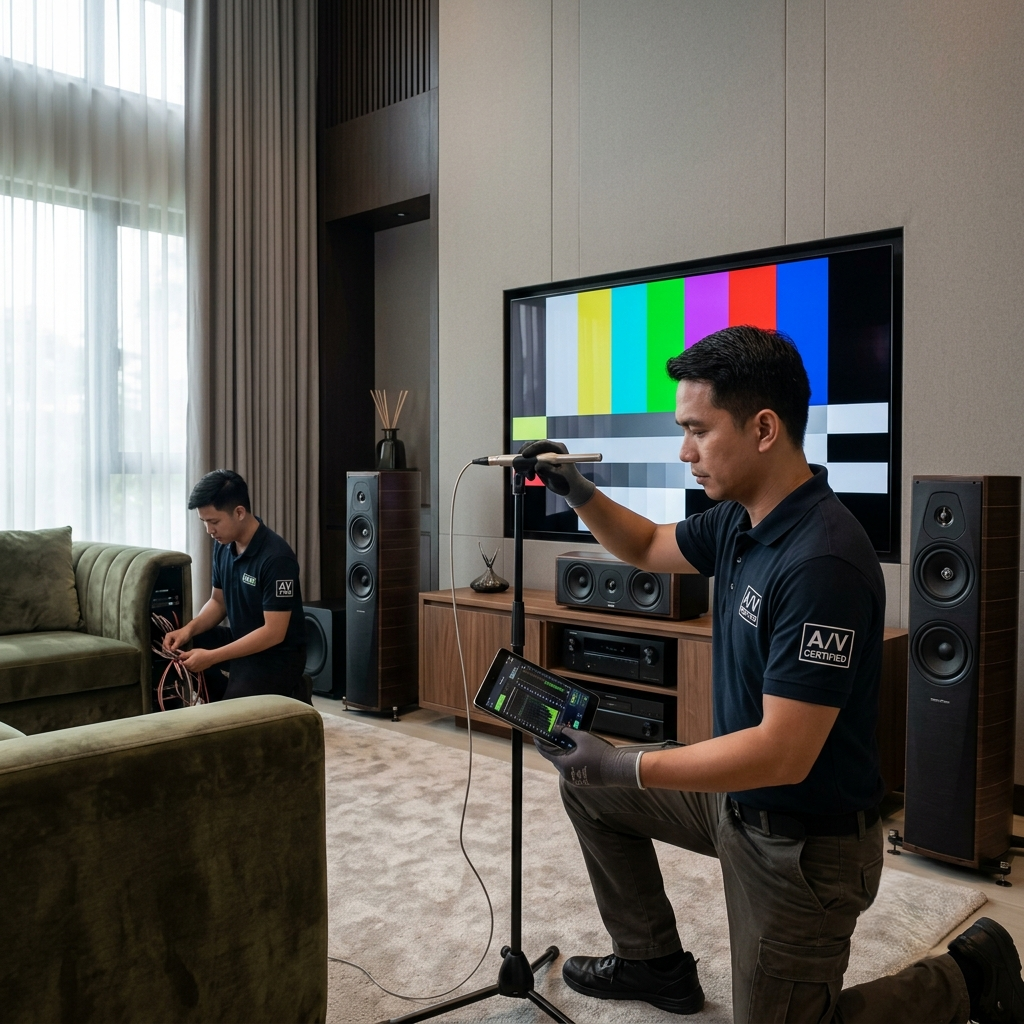
What Separates Certified Audio and Video Installers From Everyone Else Offering the Same Service in Atlanta

audio and video installers

Homeowners across Atlanta search for audio and video installers every day, hoping to find a company that turns confusing certification claims into confidence. Certifications like CEDIA, HTA, and Control4 authorization each verify specific aspects of a company's training and business practices. This guide breaks down what each credential means so homeowners can compare proposals with clarity.

What Certification Means For Audio and Video Installers

The word certified appears on almost every AV company website in Atlanta. On its own, it tells homeowners little about what the company was tested on or what standard they met. A credential names the certifying body, the requirements it verifies, and the training it represents.

Choosing among audio and video installers becomes simple once homeowners know what each certification confirms. CEDIA, HTA, and Control4 credentials each focus on a different part of the process, from technical skill to business accountability. Understanding these differences helps homeowners compare quotes with confidence.

CEDIA Certification and Individual Skill

CEDIA certification confirms that a designer or technician passed a tested exam on system design, acoustic principles, and network architecture. The credential requires ongoing education, so it reflects current skills. This training helps a certified designer plan a home system as one connected structure from the start.

Homeowners who ask audio and video installers about their CEDIA credentials gain a clear picture of the technical training behind the proposal. A CEDIA-certified technician follows documented standards for cable management and installation safety. This creates a strong foundation for long-term system performance.

Continue reading

Deprecated: Creation of dynamic property EasyBlogSocialButtonExternal::$post is deprecated in /home/mrpoatlantaaudio/public_html/administrator/components/com_easyblog/includes/socialbuttons/adapters/external.php on line 42

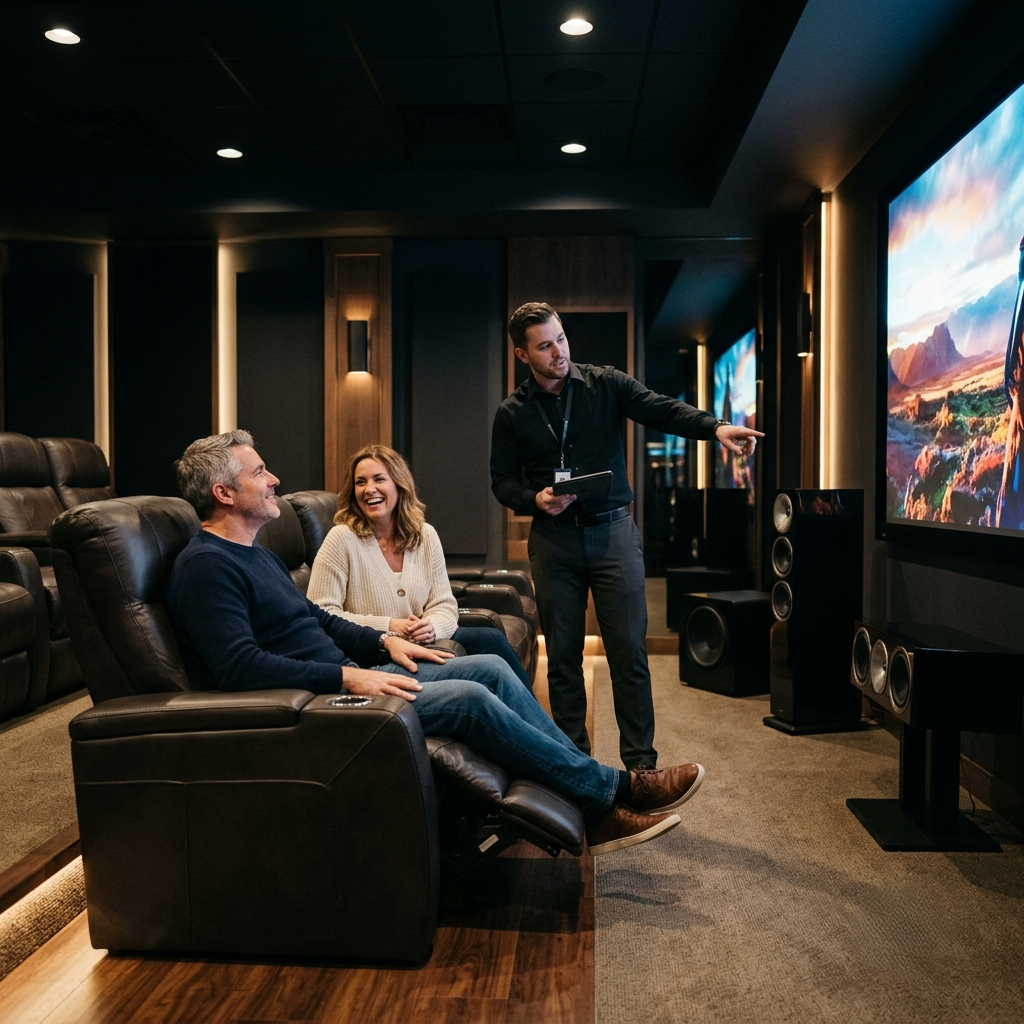
What Atlanta Homeowners Discover When They Stop Searching "Home Theater Design Near Me" and Actually Visit a Local Design Showroom

home theater design near me

Homeowners searching home theater design near me often arrive with weeks of research already done. They understand acoustic treatment, projection systems, and seating layout. A showroom visit turns that research into an experience they can feel in the room.

Online research gives homeowners a strong foundation. Articles, videos, and photos explain the technology and show finished rooms. A showroom visit adds the missing piece, the feeling of standing inside a calibrated space and hearing what a system produces.

What A home theater design near me Visit Reveals

A visit built around home theater design near me turns curiosity into clarity. Homeowners hear calibrated audio, see true scale projection, and try simple controls in one afternoon. Every discovery below happens best in person.

Calibrated Sound You Can Hear

A showroom visit for home theater design near me demonstrates the gap between a system installed and one calibrated for its room. Speakers are placed and measured for the space. The frequency response is tuned so that dialog, music, and effects sit in distinct positions around the listener.

Notice how sound fills every seat in the room. Notice how the dialogue stays clear next to the music and effects. Notice the way bass adds depth without covering the rest of the mix.

Continue reading

Deprecated: Creation of dynamic property EasyBlogSocialButtonExternal::$post is deprecated in /home/mrpoatlantaaudio/public_html/administrator/components/com_easyblog/includes/socialbuttons/adapters/external.php on line 42

When to Bring a Home Theater Design Company Into Your Atlanta Build or Renovation and Why the Timing Changes Everything

home theater design company

Every Atlanta homeowner planning a new build or a major renovation wants a home theater that performs well from day one. Bringing in a home theater design company early gives your project team clear guidance before walls, wiring, and mechanical systems are finished. This guide walks through the five moments when early planning makes the biggest difference for your build.

A home theater design company brings value early, while the architect is still drawing floor plans and elevations. Working together from the start means room sizes, ceiling heights, and structural details support the theater experience you want. Every specification arrives on paper first, so the crew builds it correctly the first time.

Room Dimensions and Ceiling Height Come First

Room size and ceiling height shape how a projector throws its image and how speakers sit in the ceiling. Planning these details with your design team early creates space for a large screen and clean sightlines from every seat. Structural elements such as beams and ductwork are positioned with the theater plan in mind.

This early input from a home theater design company turns a good room into a great one. Every measurement supports the viewing experience you picture for the space. The architect gets these numbers before the drawings are locked in.

Acoustic Isolation Belongs in the Framing Stage

Good acoustic isolation keeps the theater sound in the theater, so a movie night stays enjoyable for the rest of the house. This calls for decoupled wall assemblies, resilient channels, and acoustically rated doors placed correctly during framing. Handling this stage properly saves the cost and mess of opening finished walls later.

Continue reading

Deprecated: Creation of dynamic property EasyBlogSocialButtonExternal::$post is deprecated in /home/mrpoatlantaaudio/public_html/administrator/components/com_easyblog/includes/socialbuttons/adapters/external.php on line 42

How an Outdoor Entertainment Company Transforms the Most Undervalued Space in an Atlanta Home Into Its Most Talked-About Feature

outdoor entertainment company

An outdoor entertainment company turns a quiet backyard into the busiest room in the house. Atlanta homeowners invest heavily in kitchens, bathrooms, and floors, and the backyard often waits for equal attention. The patio and yard stay pleasant and well-kept, yet the space rarely gets its own identity. We help homeowners give that outdoor space a voice, a picture, and a mood that matches the rest of the home. Every project starts with the way a family already spends time outside.

An outdoor entertainment company Starts With How You Live

An outdoor entertainment company starts every project by looking at how a family spends time outside. Some homeowners host often and want a space built for guests, with room for music, food, and conversation. Some want a quiet corner for morning coffee and evening quiet, away from the noise of the street. A few want both, split across different zones of the same yard. The starting point always comes from daily habits and honest conversations with the homeowner.

The plan grows from these habits and takes shape around the family that lives there. Every yard gets a design suited to the people who use it, from the layout of the speakers to the placement of the screen. A family with young kids gets one kind of plan, and a couple who hosts twice a year gets another. This keeps the final setup personal and useful for years, since it grows with how the home is used every day.

Sound That Fills The Whole Yard

Speakers built into gardens and patios evenly distribute sound across the yard. An outdoor entertainment company places these speakers to reach every corner, from the pool to the dinner table, so every seat gets the same experience. Guests enjoy steady, comfortable volume everywhere, and conversation continues easily beside the music. The sound follows people as they move through the space, from the grill to the fire pit. Everyone can hear the music clearly at a natural, comfortable level from anywhere in the yard.

The speakers stay hidden within the plantings and hardscape, tucked among the greenery and stonework. Homeowners notice the sound quality before they notice the equipment, since the goal is a natural feel with the setup staying out of sight. The yard feels finished, and the audio feels like part of the design itself. This kind of placement takes planning, and it pays off every time guests walk through the space.

Continue reading

Deprecated: Creation of dynamic property EasyBlogSocialButtonExternal::$post is deprecated in /home/mrpoatlantaaudio/public_html/administrator/components/com_easyblog/includes/socialbuttons/adapters/external.php on line 42

Why Atlanta Homeowners Who Invest in an Outdoor Entertainment System Stop Going Out and Start Having Everyone Over

outdoor entertainment system

An outdoor entertainment system turns a plain backyard into the place friends and family choose over a night out. Atlanta homeowners who add one to their patio or pool area often find that their home becomes the spot where everyone gathers. The right setup makes hosting simple and turns any evening into an occasion worth showing up for.

The homes people gather at most are the ones that are ready before the moment starts. This guide shows how a well-planned outdoor space builds that reputation over time. It also shows how simple upgrades keep guests coming back all year.

The Outdoor Entertainment System That Changes The Math

An outdoor entertainment system changes how a gathering gets priced over time. Dining out with friends in Buckhead or grabbing drinks downtown can add up fast over a full season, as a backyard built for entertaining can spread those costs across many evenings at home.

A backyard with an outdoor entertainment system feels like an experience, not a plain patio. High fidelity audio, a bright outdoor display, and lighting that sets the mood create lasting value for every gathering. Guests notice the difference right away and want to come back.

Hosting Feels Simple With The Right Setup

Managing lighting, sound, and cleanup can take up most of a host's evening. A well-designed outdoor entertainment system handles these tasks through one-touch automation. Audio adjusts on its own, lighting shifts with the evening, and the display turns on in one simple scene.

Continue reading

Deprecated: Creation of dynamic property EasyBlogSocialButtonExternal::$post is deprecated in /home/mrpoatlantaaudio/public_html/administrator/components/com_easyblog/includes/socialbuttons/adapters/external.php on line 42

The Best Time to Upgrade Home Network Systems Is Before You Finish the Renovation: Here's Why Atlanta Homeowners Learn This the Hard Way

home network systems

Renovation projects move fast, and network planning waits until the walls close. Homeowners finish additions, theaters, and outdoor rooms only to find a weak signal where it matters most. Planning home network systems early keeps every renovation phase moving forward together.

Atlanta homeowners face this pattern often during additions and full home builds. Each phase of construction opens a window for clean wiring and closes it soon after. This guide walks through every phase and shows the best moment to act.

Why Home Network Systems Need Renovation Timing

A renovation includes hundreds of decisions about finishes, fixtures, and permits. Home network systems stay invisible when installed well, so teams often place them low on the list. Every part of a reliable connected home depends on choices made during construction.

Wiring, access point placement, and equipment room location all connect to the construction schedule. Waiting until the finish stage narrows the choices available to homeowners. Acting early keeps every option open and every cost predictable.

The Planning Window Before Framing Begins

Design and permitting offer the widest window for clean planning. A wiring plan added to architectural drawings during this stage costs very little. Access point placement, cable routes, and equipment room location are reduced to simple lines on a page.

Continue reading

Deprecated: Creation of dynamic property EasyBlogSocialButtonExternal::$post is deprecated in /home/mrpoatlantaaudio/public_html/administrator/components/com_easyblog/includes/socialbuttons/adapters/external.php on line 42

The 6 Questions Every Atlanta Homeowner Should Ask a Home Network Company Before Signing Anything

home network company

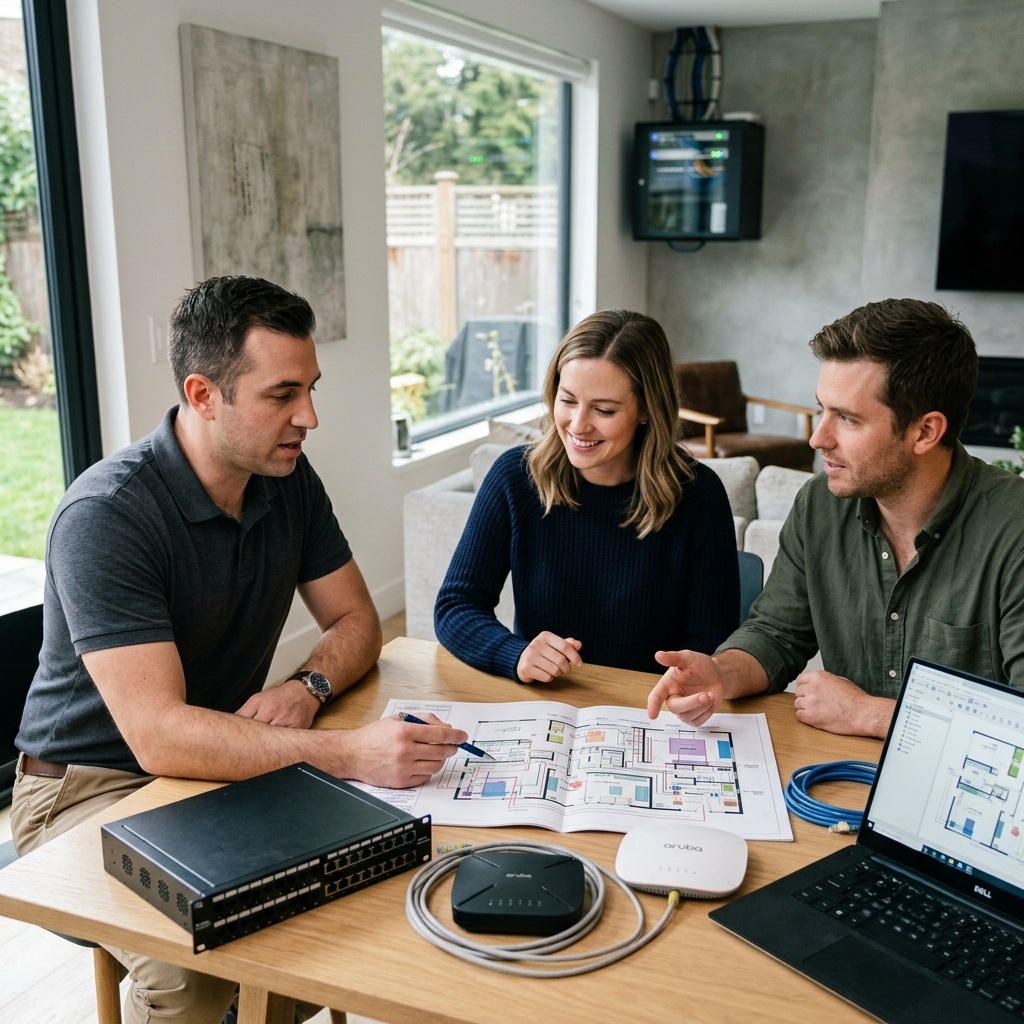
Hiring a home network company can feel confusing when every quote sounds the same. Homeowners across Atlanta want a network that keeps up with smart devices, security cameras, and daily streaming. This guide gives you six clear questions to ask so you can compare companies with confidence.

Many companies use similar words in their proposals, such as full coverage and professional-grade equipment. These words help you compare offers when you know what to ask next. The questions below show you how to see the actual capability behind each proposal.

Understanding What A Home Network Company Should Offer

A strong home network company designs your network around your home. The team studies your walls, your floor plan, and the number of devices you plan to connect. This approach gives every homeowner a network built for daily life.

The right partner listens to your goals, from smart lighting to whole home audio. They test signal strength in every room, including outdoor spaces you use often. This process forms the foundation for the six questions that follow.

Question One: The Value Of A Site Survey

A site survey helps a home network company understand your home's structure before design begins. The team studies wall materials, room layout, and possible interference sources. Atlanta homes built with brick or concrete often require extra planning to achieve a strong signal.

Continue reading

Deprecated: Creation of dynamic property EasyBlogSocialButtonExternal::$post is deprecated in /home/mrpoatlantaaudio/public_html/administrator/components/com_easyblog/includes/socialbuttons/adapters/external.php on line 42

Why the Type of Home Automation Company You Choose Matters More Than the Technology You Choose

AAA_20260713-160549_1

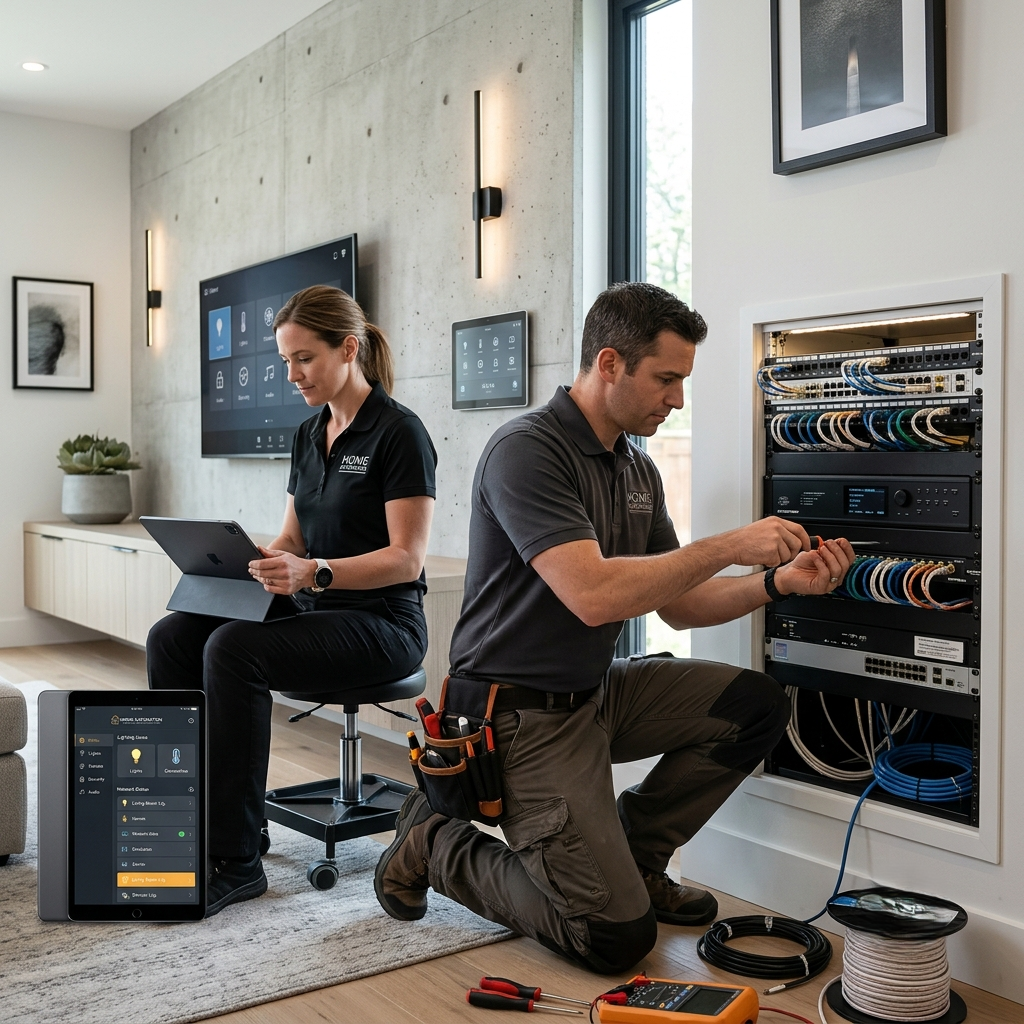
Choosing a home automation company shapes how your smart home performs for years to come. Homeowners often spend weeks comparing platforms, devices, and control systems. The company behind the installation determines the outcome far more than the installation itself.

Every installer fits into one of four groups. Some design complete systems from the ground up. Others place hardware and consider the job finished.

Understanding the Home Automation Company Options

Homeowners meet four kinds of providers when planning a project. Dedicated integrators design and install complete systems as their main craft. Retailers sell devices and add installation as an extra service.

Electricians and contractors add smart features to their regular projects. Assist services connect homeowners with independent technicians for single devices. A true home automation company treats whole home design as the primary craft, so the outcome reflects that focus.

Dedicated Integrators

These companies build systems from an architectural perspective first. Every device serves a plan drawn before installation begins. Homeowners gain systems built to work together for years.

Continue reading

Deprecated: Creation of dynamic property EasyBlogSocialButtonExternal::$post is deprecated in /home/mrpoatlantaaudio/public_html/administrator/components/com_easyblog/includes/socialbuttons/adapters/external.php on line 42

The Security Advantage Most Atlanta Homeowners Don't Realize Home Automation Systems Already Include

AAA_20260713-160043_1

Atlanta homeowners often see home security and comfort as separate. Home automation systems combine both, creating a sense of safety and ease that can be trusted today.

A monitored alarm covers doors and windows. A connected system covers lighting, shading, cameras, locks, and the network that ties them together. Every one of these pieces adds a layer of protection that your household can feel every day.

Home Automation Systems and Home Security Working Together

Home automation systems designed with security in mind cover multiple areas of the home simultaneously. Lighting, shading, cameras, locks, and network protection are managed from a single shared plan. Each part supports the others, so the whole home responds together.

A monitored alarm still watches doors and windows well. A connected platform adds occupancy patterns, camera alerts tied to context, and leak detection across the house. Atlanta households gain a fuller picture of their home at any hour.

Lighting That Feels Like Someone Is Home

Lighting scenes turn lamps on and off in different rooms at different times. Evening patterns shift night to night, so the pattern stays natural. A house lit this way looks lived in from the street.

Continue reading

Deprecated: Creation of dynamic property EasyBlogSocialButtonExternal::$post is deprecated in /home/mrpoatlantaaudio/public_html/administrator/components/com_easyblog/includes/socialbuttons/adapters/external.php on line 42

Why Atlanta Real Estate Professionals Are Starting to Talk About Home Theater Company Installations as a Home Value Asset

home theater company

Atlanta homeowners are asking a good question these days. Does a home theater company installation add value to a home, or does it simply add enjoyment? The answer depends on how the system is designed, built, and documented.

Real estate agents, architects, and interior designers across metro Atlanta are increasingly treating professional installations differently from standard setups. This shift is happening for a reason people can see and measure. Homeowners planning a project want confidence that the investment will retain its value in the home.

What Makes A Home Theater Company Installation A Home Value Asset

A home theater company installation becomes a home asset when it meets four clear standards. It needs coordination with the architect and interior designer, technology that stays hidden from view, and integration with the rest of the home's systems. It also needs documentation that a new owner can rely on for years to come.

These standards separate a system built into the home from one placed inside it. Atlanta's design and real estate professionals notice this difference because it shows in how the room feels and functions. A well-planned theater reads as part of the house, complete from the design stage forward.

Real Estate Professionals Notice The Difference

Atlanta's upscale home market has long treated technology as an afterthought, added only after the design work finished. That view is changing as architects and designers work with certified integrators from the earliest planning stages. The gap between a professional installation and a standard setup has become easy to see.

Continue reading

Deprecated: Creation of dynamic property EasyBlogSocialButtonExternal::$post is deprecated in /home/mrpoatlantaaudio/public_html/administrator/components/com_easyblog/includes/socialbuttons/adapters/external.php on line 42

The Home Theater Systems Decisions Atlanta Homeowners Wish They Had Made Differently and How to Get Them Right the First Time

home theater systems

Home theater systems work best when a few key decisions are made early and with care. Atlanta homeowners who love their finished theaters made these choices well from the start. This guide walks through each decision and shows how to make it work for your space.

The room shapes everything a theater can become. Ceiling height, room shape, and wall distance set the stage for screen size and speaker placement. Deciding whether a room supports the experience you want starts with its geometry.

Home theater systems perform best when the room is chosen for its layout and potential. A design consultation reviews several rooms early and finds the one that best fits the experience you want. This step protects every dollar spent on equipment and treatment in the future.

Building Sound That Works For The Room

Great sound depends on the room as much as it does on the speakers. Hard surfaces and empty walls create echo and uneven tone, even with quality equipment filling the space. Acoustic panels absorb and spread sound so every seat hears music and dialogue clearly.

Home theater systems reach full potential when acoustic treatment is planned alongside the layout. A design team maps panel placement into the room plan from day one. This approach protects the audio investment already made in the space.

Continue reading

Deprecated: Creation of dynamic property EasyBlogSocialButtonExternal::$post is deprecated in /home/mrpoatlantaaudio/public_html/administrator/components/com_easyblog/includes/socialbuttons/adapters/external.php on line 42

How Smart Home Systems Change the Daily Habits of Atlanta Households Without Anyone Having to Think About It

smart home systems

Living with smart home systems feels calm and simple once the technology settles into daily life. Atlanta homeowners often say the systems become part of the background within weeks. Families notice their habits shift in surprising ways.

These changes show up in small moments across the home. Bedtimes shift earlier. Mornings feel calmer, and coming home feels welcoming from the moment the door opens. These shifts follow simple patterns that anyone can understand.

Smart Home Systems Support Earlier Bedtimes

Smart home systems guide the evening through gentle lighting changes. Around nine in the evening, the lights shift from bright task lighting to warm, low light. Families notice they feel ready for rest earlier in the night, and this shift happens through the environment itself.

Light plays a strong role in human rest cycles. Bright light signals energy and alertness, while warm light signals calm. When the home changes light on its own, family members follow that calm signal with ease.

Mornings Feel Calmer With Automation

Homes with programmed morning routines shift lights and climate before anyone wakes fully. This gentle start removes the need for small manual tasks each morning. Smart home systems create this ease through simple automation.

Continue reading

Deprecated: Creation of dynamic property EasyBlogSocialButtonExternal::$post is deprecated in /home/mrpoatlantaaudio/public_html/administrator/components/com_easyblog/includes/socialbuttons/adapters/external.php on line 42

Categories