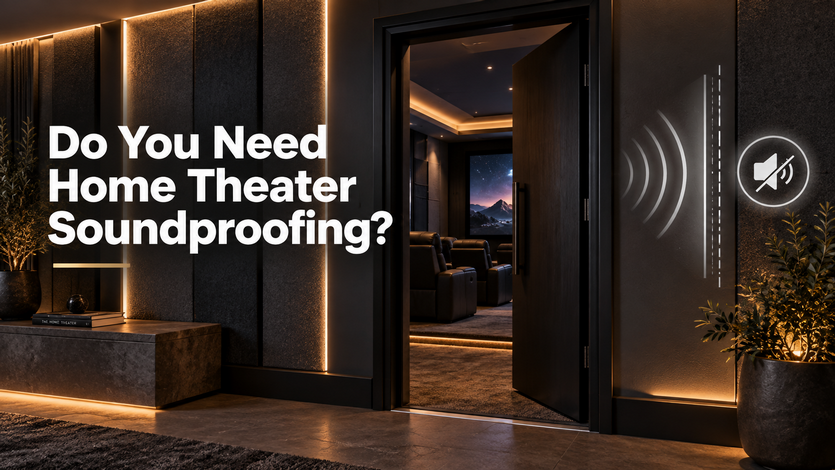
You need home theater soundproofing if movie or music volume is disturbing other rooms, other people in the house, or neighbors — and you don't need it if your main concern is how the room itself sounds, which is a separate issue handled by acoustic treatment instead. These two get confused constantly because they sound similar, but they solve different problems and use different materials.
Soundproofing vs. Acoustic Treatment: The Distinction That Matters
Soundproofing controls sound transmission — keeping noise from leaving the room (or entering it from elsewhere in the house). Acoustic treatment controls sound behavior — how clear or muddy the audio sounds once you're inside the room. A theater can have excellent acoustic treatment and still be loud enough to hear from two rooms away, because acoustic panels and bass traps aren't designed to block sound transmission through walls; that's a separate job requiring different construction.
Signs You Actually Need Soundproofing
The clearest sign is a direct complaint — someone in an adjacent room, upstairs bedroom, or next door can hear movie dialogue, bass, or explosions clearly enough that it's disruptive. Homes where the theater room shares a wall with a bedroom, home office, or nursery are the most common candidates, especially if movie nights happen in the evening while others are trying to sleep or work. If nobody has ever mentioned hearing anything from the theater room, soundproofing likely isn't a pressing need yet, regardless of how the room sounds inside.
What Soundproofing Actually Involves
Effective soundproofing typically combines a few approaches rather than relying on one: mass-loaded vinyl or additional layers of drywall to add density to walls (sound has a harder time passing through denser material), decoupling techniques like resilient channels that physically separate one side of a wall from the other to interrupt vibration transfer, and sealing air gaps around doors, outlets, and vents, since sound leaks through even small openings the way air does. A solid-core door with a proper seal makes a bigger difference than most homeowners expect, since a standard hollow interior door transmits sound easily regardless of what's done to the walls.
Bass Is the Hardest Frequency to Stop
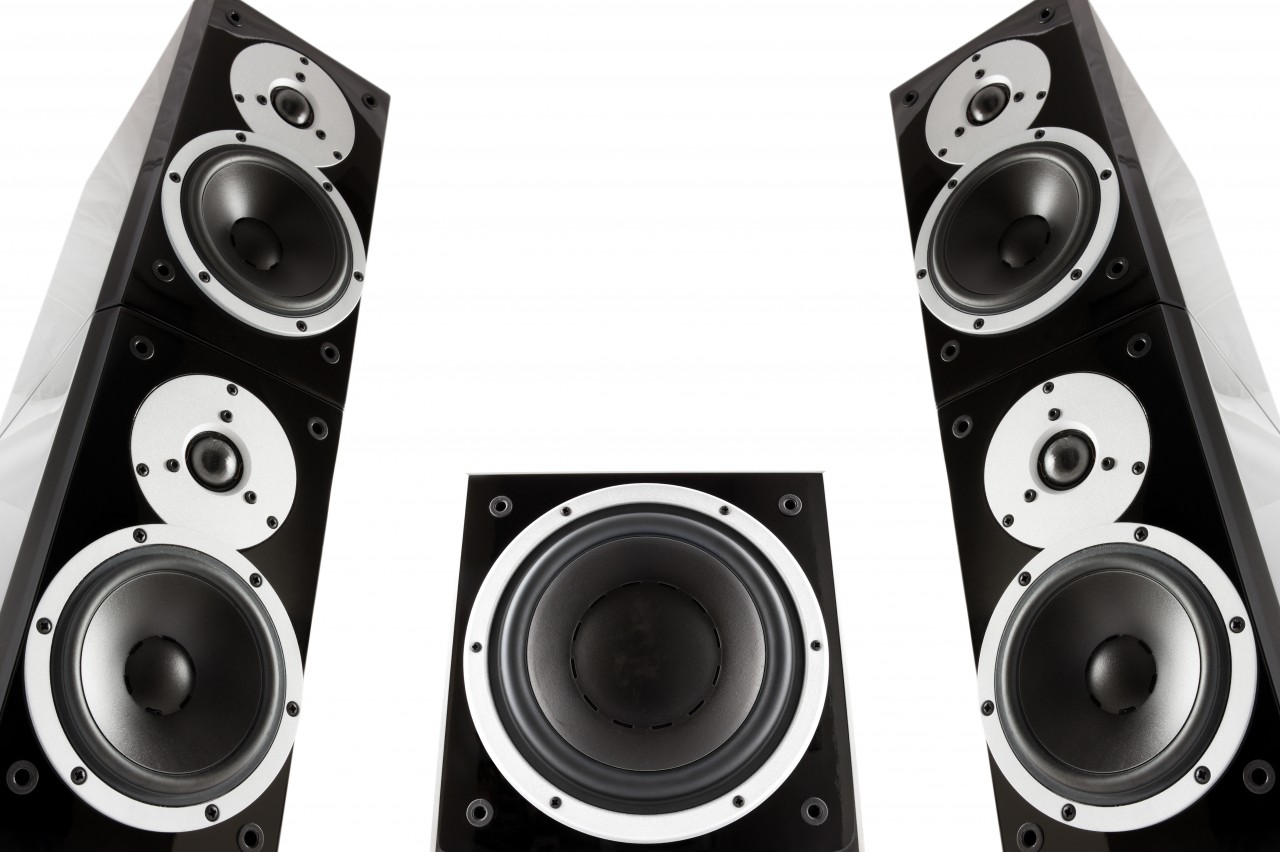
Low frequencies — the deep rumble from a subwoofer or explosion effects — are the most difficult sound to contain, because bass travels through structure (floors, framing, ductwork) rather than just air. This is why a room can be reasonably soundproofed against dialogue and mid-range sound but still transmit bass elsewhere in the house; addressing bass transmission specifically often requires isolating the subwoofer itself, not just treating the walls.