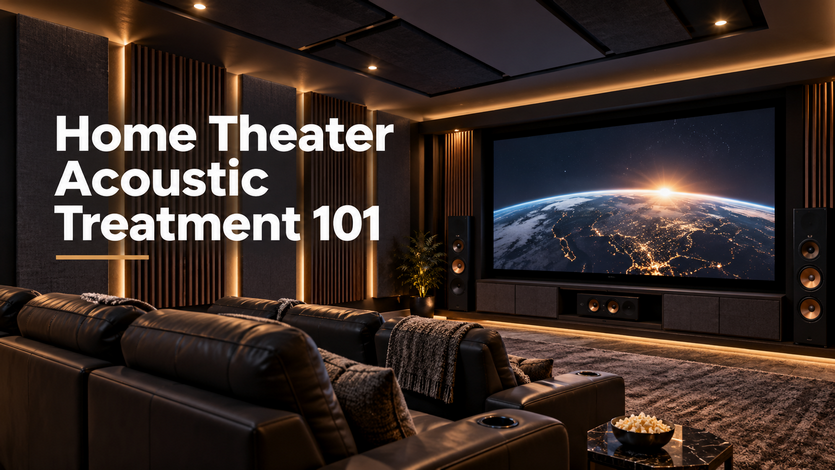
Acoustic treatment is what stops a home theater from sounding boomy, echoey, or muddy — it's a set of materials placed strategically around the room that absorb, diffuse, or trap specific sound frequencies before they bounce around and distort what you're hearing. Even the best speakers can sound disappointing in an untreated room; treatment is what lets them perform the way they were designed to.
Why an Expensive System Can Still Sound Bad
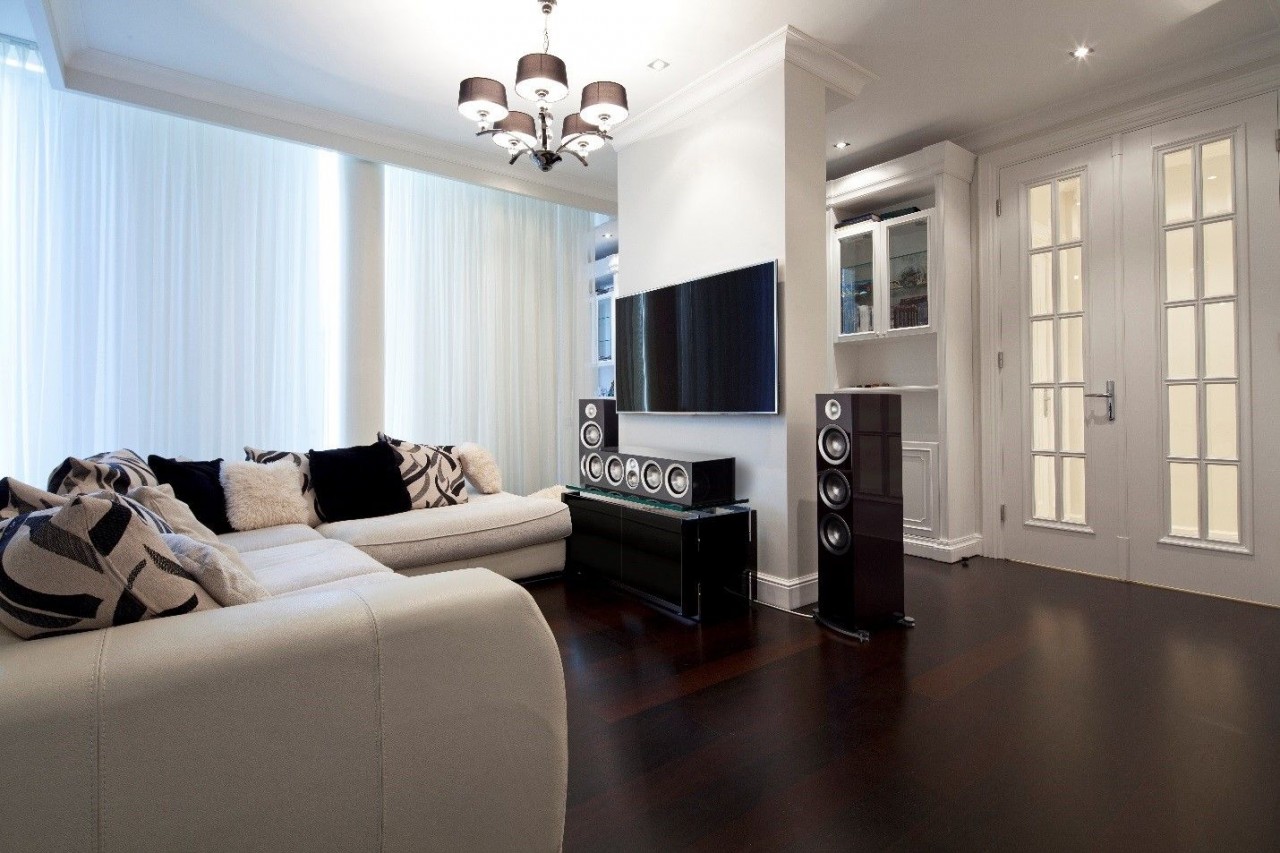
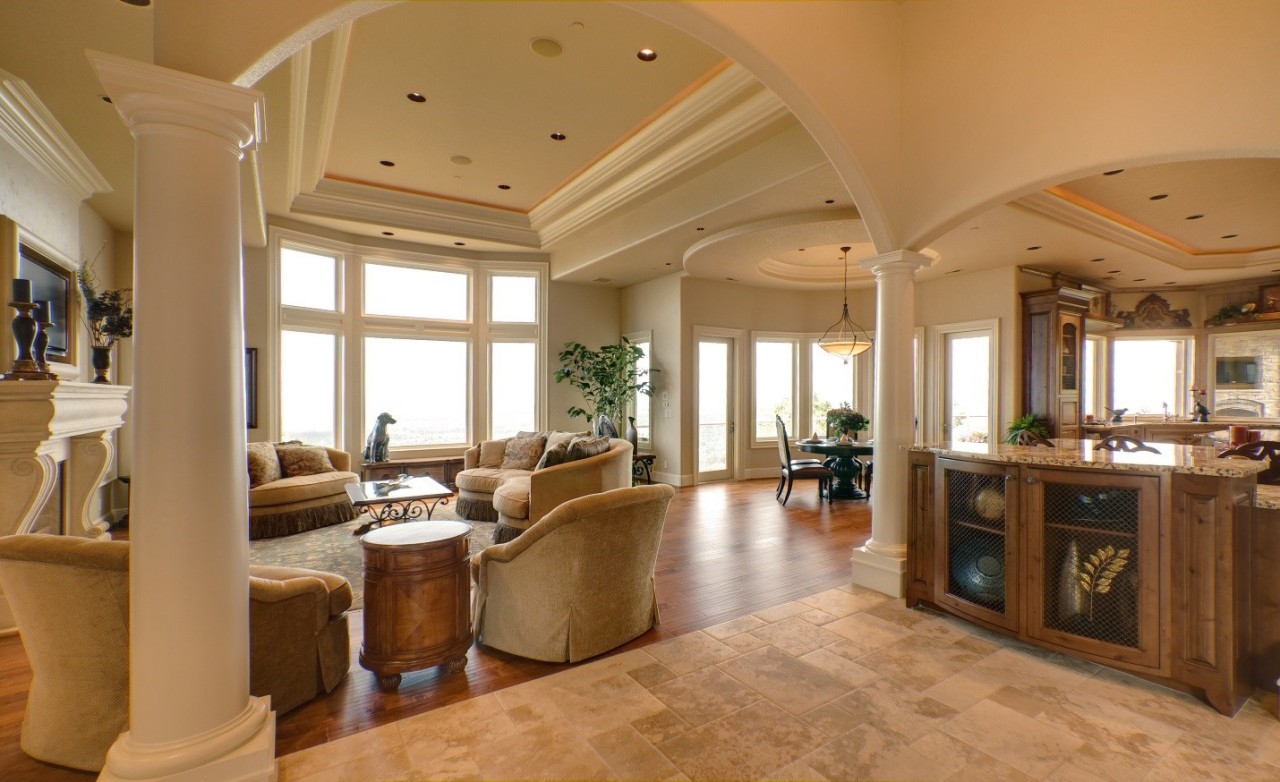
Sound doesn't travel in a straight line from the speaker to your ears — it bounces off walls, ceilings, and floors, arriving at slightly different times and creating interference. In a room full of hard, parallel surfaces (drywall, glass, hardwood floors), this creates echo, muddiness in dialogue, and bass that sounds boomy in one seat and thin in another. This has nothing to do with speaker quality and everything to do with how the room handles sound.
Acoustic Panels: Taming Reflections
Acoustic panels are the flat, fabric-wrapped foam or fiberglass boards most people picture when they think "soundproofing," though their real job isn't blocking sound — it's absorbing mid and high-frequency reflections so dialogue stays clear instead of getting washed out by echo. The most effective placement is at "first reflection points" — the spots on the side walls and ceiling where sound from the speakers would first bounce back toward the listening position.
Bass Traps: The Most Skipped, Most Important Piece
Low frequencies behave differently than the rest of the audio spectrum — they build up in room corners, creating boomy or uneven bass depending on where you're sitting. Bass traps are thicker acoustic panels, usually placed in the corners of a room (including where walls meet the ceiling), specifically designed to absorb these low frequencies. Rooms with acoustic panels but no bass traps often still sound "off" in a way that's hard to pinpoint — usually it's untreated bass buildup.
Diffusion: Spreading Sound Instead of Absorbing It
Absorption (panels and bass traps) removes sound energy from the room. Diffusion, using textured panels that scatter reflections in multiple directions instead of absorbing them, keeps a room from sounding overly "dead" or flat, which can happen if a room is treated with too much absorption alone. Diffusers are typically used on the back wall behind the seating, preserving some natural spaciousness in the sound rather than a totally sealed, sound-booth feel.