Call us to schedule a consultation! 770-977-9110 

A Room-by-Room Guide to Planning Motorized Shades in Your Atlanta Home

motorized shades

Every room in your home has a different relationship with light, and that is exactly why motorized shades deserve a room-by-room approach.

A bedroom calls for full blackout at night and a gentle rise of light in the morning. A home theater calls for total darkness the moment the film starts. Planning each space on its own terms gives you a system that feels personal, practical, and worth every penny.

This guide walks through the five rooms where motorized window treatments make the biggest difference, the questions worth asking in each space, and how all the individual decisions come together in a coordinated whole-home system.

Why a Room-by-Room Plan Produces Better Results

A whole-home installation planned window by window produces results that feel intentional. Motorized shades installed with a clear room-by-room strategy perform better from day one.

The bedroom has blackout and wake-schedule automation logic that serves no purpose in the dining room. The home theater has lighting control needs that go far beyond those of the living room. Treating each space as its own design problem is what closes that gap.

Continue reading

Why Home Audio and Video Solutions Fail in Atlanta and How Professional Systems Are Built to Last

home audio and video solutions

Every summer, Atlanta homeowners discover that their home audio and video solutions follow a familiar and frustrating pattern. What worked beautifully in May starts showing problems between late June and mid-August. These failures are predictable because consumer-grade outdoor AV products are built for conditions they were never designed to withstand.

Atlanta's climate creates a specific combination of stressors that push consumer products past their limits. Sustained solar radiation, afternoon humidity above 80%, daily thunderstorm cycles, and high pollen loads all work together across a four to five-month season. Understanding these failures clearly is the first step toward choosing a system that holds up season after season.

Why Atlanta Summers Are Hard on Outdoor AV Systems

The Atlanta metro area sits in a climate zone that is uniquely demanding for outdoor electronics. Surface temperatures on sun-exposed displays can climb 20 to 40 degrees above the surrounding air temperature on a typical July afternoon. Speaker components that perform well in drier climates begin breaking down under the combination of heat, humidity, and rapid temperature swings that Atlanta thunderstorms bring.

Consumer product ratings are established in controlled laboratory settings that measure ambient temperature and splash resistance. They are built to handle one variable at a time, and Atlanta throws several at once. Pollen accumulation seals moisture against metal mounting surfaces, Wi-Fi routers reach capacity under peak summer household loads, and speaker surrounds soften and delaminate after repeated thermal cycling.

The homeowners who keep replacing equipment every one to two summers are selecting from a product category that was simply not built for this environment. Professional home audio and video solutions are specified for the actual conditions of the installation site, matched component by component to what Atlanta summers demand.

Continue reading

Home Movie Theater Installation: The Fire Risks Atlanta Pros Prevent

home movie theater installation

A home movie theater installation brings together significant electrical loads, heat-generating equipment, and carefully chosen materials all in one room. Atlanta homeowners who plan this investment deserve to know the specific risks that come with improper setup. This guide covers five safety concerns that professional installers address at the design stage, before work ever begins.

Why Atlanta Summers Change the Safety Picture

Atlanta summers push wall cavity temperatures well past 100 degrees Fahrenheit in July and August. This reduces the margin between safe electrical operation and thermal stress for any home movie theater installation. Equipment cooling systems work harder, and heat dissipates more slowly through walls and ceilings.

Materials that handle normal operating temperatures in cooler months can face greater stress by midsummer. Any installation designed without accounting for these seasonal conditions carries risks that grow with every degree of heat. Planning for Atlanta's climate is part of every professional design process.

Risk 1: Circuits Shared With Other Room Loads

A home theater draws sustained electrical current during every viewing session. Projection systems, amplifiers, AV processors, subwoofers, and network equipment all run simultaneously. When this combined load shares a circuit with other outlets or appliances, the combined draw can push the circuit close to its rated capacity.

Wiring operating at near-capacity generates resistive heat, a well-documented ignition mechanism that builds slowly within walls. In Atlanta summers, that heat dissipates more slowly from wall cavities, narrowing the safe operating margin. Dedicated circuit design, sized to the installation's full load, is a baseline professional requirement for every properly planned home theater project.

Continue reading

What Smart Home Automation Actually Does to Your Energy Bill During an Atlanta Summer

smart home automation

Smart home automation gives Atlanta homeowners a measurable way to reduce summer cooling costs through whole-home coordination. A professionally integrated system with motorized shading, climate control, lighting, and scheduling works together to reduce heat before it builds up inside the home. The difference between this approach and a single smart device is categorical.

Why a Whole-Home System Outperforms a Single Device

A smart thermostat handles the cooling response, and a smart home automation system handles the heating source itself. Every layer of the system shares information and responds to the same environmental inputs simultaneously. That coordination is what produces real efficiency gains across a full Atlanta summer.

When shading, climate, lighting, and scheduling operate as a single system, the thermostat manages a smaller thermal load from the start. The result is shorter cooling cycles, lower runtime during peak hours, and a home that stays comfortable with less energy. Each layer makes the others more effective.

How Motorized Shading Reduces Solar Heat Gain

South and west-facing windows in an Atlanta home admit intense direct sunlight from roughly 10 AM to 4 PM throughout the summer. Solar heat gain is one of the largest contributors to cooling load during the most expensive hours of the day. The HVAC system runs longer and harder cycles precisely when ambient temperatures are at their highest.

A professionally programmed shading system lowers window treatments on southern and western exposures before peak solar hours and raises them again as the sun angle drops. This is a proactive approach that stops heat from entering in the first place. The HVAC system then manages a smaller temperature difference during the most demanding part of the day.

Continue reading

What a Home Theater Design Company Does to Defeat Atlanta's Summer Heat

home theater design company

A home theater design company understands that Atlanta summers are among the most punishing conditions for AV equipment in the country. Peak movie hours fall right during the hottest parts of the day, and equipment racks in media rooms absorb every degree of that heat. Thermal management starts at the design stage, well before any component gets installed.

Why Atlanta Summers Demand a Smarter Design Approach

Every AV component generates heat during operation. Projectors, amplifiers, processors, and networking equipment all generate thermal output that needs a path to the outside. When that heat accumulates inside a rack or enclosed media room, components trigger automatic shutdowns, fan noise climbs, and performance drops.

Atlanta adds extra pressure to this equation. Evening movie sessions and weekend viewing occur during peak ambient-temperature hours in summer. Media rooms, bonus rooms, and basement theaters are often the least aggressively cooled spaces in a home.

A home theater design company treats this as a primary design variable, solved on paper before a single purchase order is placed.

How Rack Engineering Controls Heat at the Source

The equipment rack is where thermal success or thermal failure originates. Professional rack design starts with placement, ensuring the rack is located where air can flow freely around it and conditioned air from the room's supply path reaches the equipment zone.

Continue reading

Audio Video Installations: The Atlanta Homeowner's Summer Timing Guide

audio video installations

Summer is the best season to enjoy a professionally installed AV system in Atlanta, and April is the best time to begin planning audio-video installations. Atlanta homeowners who want outdoor speakers, a home theater build, or whole-home audio ready for summer should be in active consultation by early May. The design, proposal, and scheduling sequence that leads up to any installation takes weeks, and the homeowners who enjoy their systems through the full summer are the ones who started early.

This guide maps the complete audio-video installations calendar to Atlanta's summer entertaining season, phase by phase. Each section shows when decisions need to be made and what happens when planning begins on time.

Quick Reference: Summer AV Timeline

Phase

Target Window

What Happens

Continue reading

What Atlanta Homeowners Should Know Before Choosing a Home Theater Company

home theater company

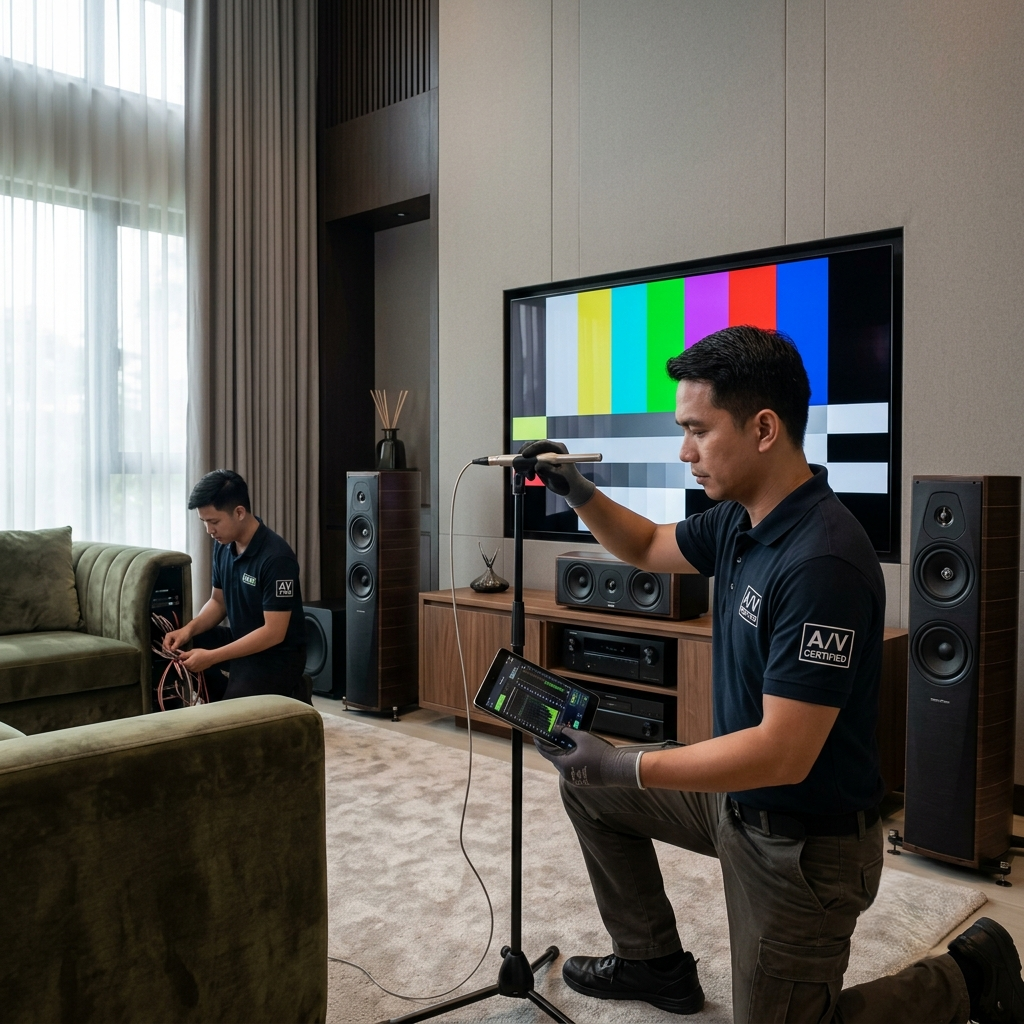
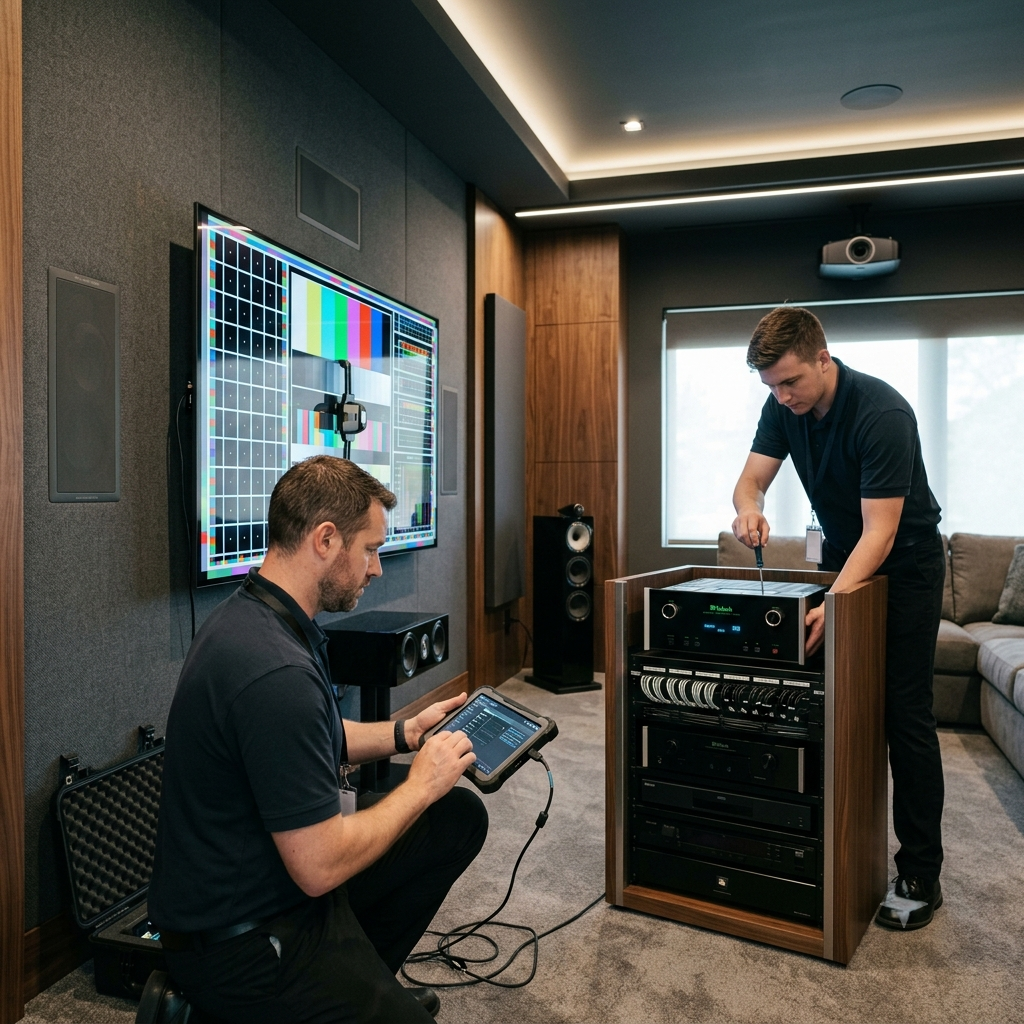
A dedicated home theater company focuses on the full acoustic and visual design of a room, covering far more than equipment selection. The work includes selecting and configuring components based on room dimensions, acoustic properties, and ambient light conditions. Every element is installed, calibrated, and integrated into one unified system.

A specialist also accounts for how home theater systems connect with the broader home technology. This is the key difference between a custom integration firm and a general AV installer. Asking a firm to describe its design process in specific terms will reveal the depth of its work.

The design process should cover acoustic treatment planning, speaker placement strategy, and calibration methods. A firm that provides clear answers to these questions is operating at the level a homeowner deserves. Service after installation should also be part of the initial conversation.

What Credentials to Verify Before Hiring

CEDIA certification confirms that individual technicians and designers have met tested education standards in home theater installation and design. It is administered independently and reflects a professional commitment to technical growth. This is a good starting point when comparing firms in Atlanta.

HTA (Home Technology Association) certification covers financial stability, proper licensing, insurance, and client protection standards, in addition to technical knowledge. It addresses the business relationship, giving homeowners a broader picture of the firm they are considering. An HTA-certified firm has been vetted on the standards that protect clients.

Continue reading

Outdoor Entertainment System Built for Atlanta Weather: The Engineering Behind a Setup That Actually Survives

outdoor entertainment system

Atlanta puts every outdoor entertainment system through conditions that expose weak engineering within a season or two. The climate here combines sustained summer humidity, intense UV exposure, frequent afternoon thunderstorms, heavy pollen loads, and shoulder season freeze cycles. These are an active stress test for every component in your setup.

What Atlanta's Climate Does to Outdoor AV Equipment

Atlanta's weather creates specific and predictable failure patterns for outdoor electronics. Homeowners across Sandy Springs, Roswell, and East Cobb have watched outdoor displays fog up, speakers deteriorate, and connectors corrode after just a few seasons. These outcomes stem from components and installation practices specified for a generic environment.

A system built to a general "outdoor-rated" label and one built to perform through Atlanta's specific seasonal demands are two different products. Understanding what separates them starts with the engineering decisions made before the first component is mounted. Every failure mode described in this blog is predictable and addressable at the design stage.

The Real Challenge: Humidity and Moisture Intrusion

Atlanta's average summer relative humidity regularly exceeds 70 percent, and overnight condensation occurs even on clear summer evenings as temperatures drop. Moisture that enters speaker enclosures, display housings, or connection points works quietly over months of repeated thermal cycling. Drivers degrade, terminals corrode, and signal integrity weakens, often with no visible warning until performance has already dropped significantly.

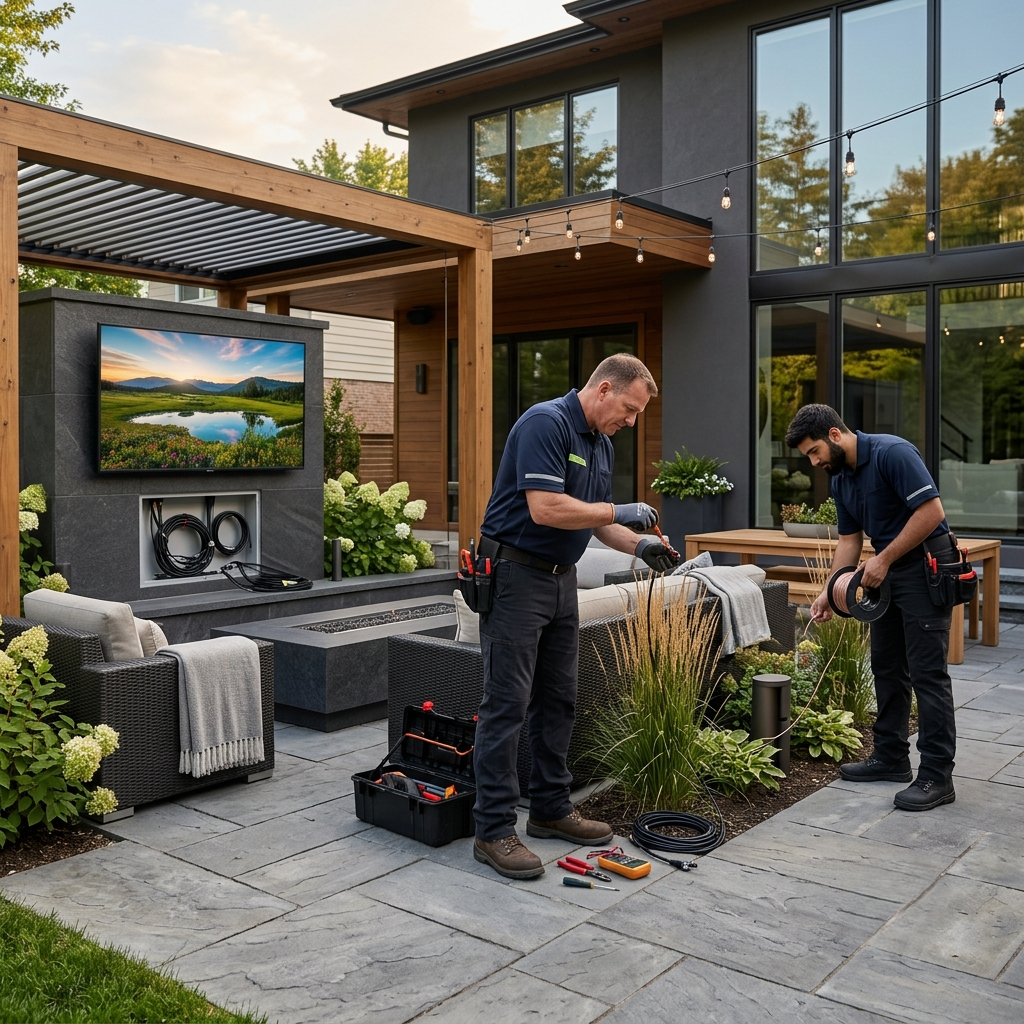
Components specified for Atlanta's humidity environment carry verified IP (ingress protection) ratings based on tested performance. Enclosure sealing, gasketed connection points, and marine-grade wiring throughout the signal chain address moisture at every potential entry point. Speaker components with treated surrounds and moisture-resistant cone materials hold up in conditions that accelerate the breakdown of standard materials.

Continue reading

Home Network Systems That Actually Work in Larger Atlanta Homes

home network systems

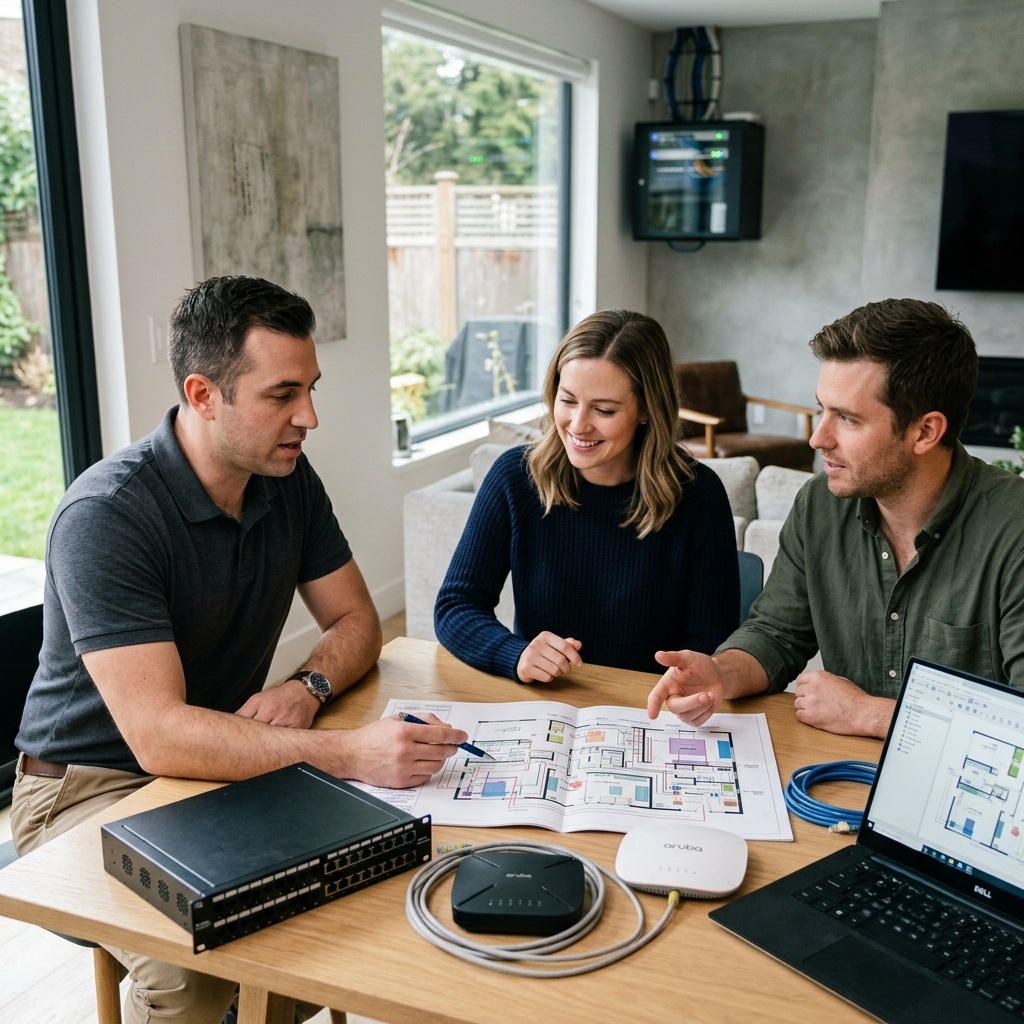
Home network systems are the foundation of every smart home. When the network fails, everything else fails with it. Atlanta Audio & Automation has been designing and installing home technology across the greater Atlanta area since 1998.

Consumer routers are built for average homes with average device counts. In larger Atlanta homes across Buckhead, Milton, Alpharetta, and Sandy Springs, the signs appear quickly. Dead zones, sluggish smart devices, and streaming drops during peak evening hours are all symptoms of a network that was never designed for the load it carries.

The fix starts at the architecture level. A purpose-built home network system addresses coverage, capacity, and reliability from the ground up. That is the difference between a network that tolerates your home and one that is built for it.

What Professional Home Network Systems Include

Structured Wiring

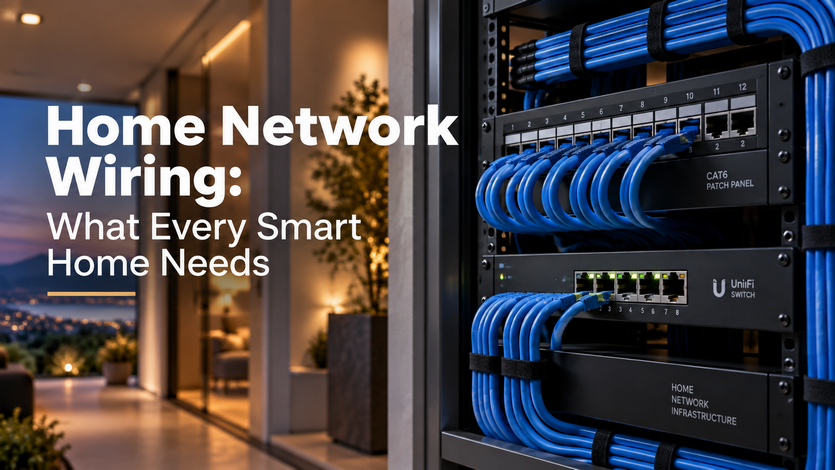
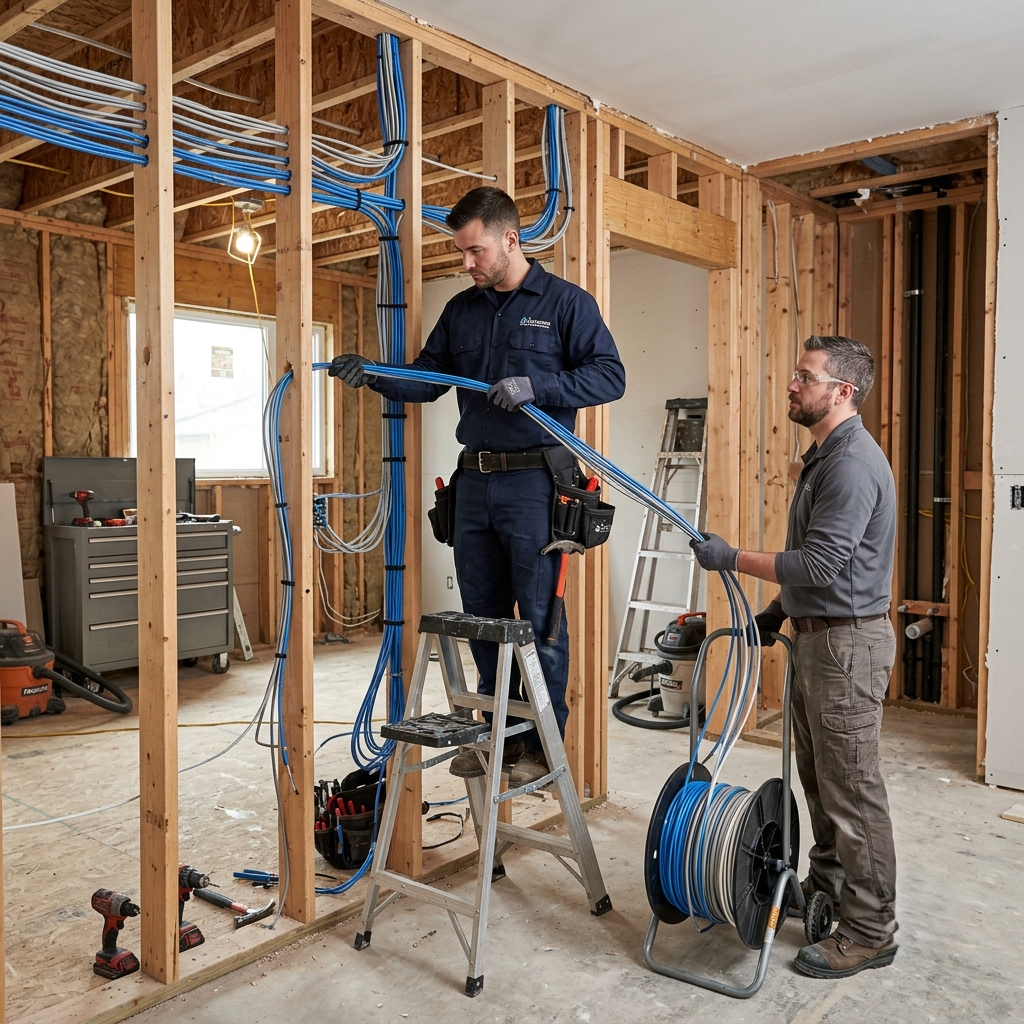
The foundation of any reliable home network system is copper. Category 6 or 6A Ethernet cabling runs to every room and terminates at a central distribution panel. Wired connections remove the interference and bandwidth variability that wireless connections carry. Every device that can be hardwired should be.

Managed Switches

A managed network switch enables traffic segmentation and prioritization. Home theater traffic, including 4K and 8K streaming and high-resolution audio, receives bandwidth priority over background smart home activity. Security cameras operate on their own isolated segment, so their traffic stays separate from everything else.

Continue reading

Home Automation Systems and the Hidden Friction They Erase

home automation systems

Home automation systems are built for the moments you have stopped noticing as burdens. The lights are adjusted, the shades are opened and closed, and the thermostat is adjusted before bed. None of it takes long, yet none of it is nothing either. This is a day-long audit of what that accumulated weight looks like in an Atlanta home, and what a professionally designed whole-home system does about each piece of it.

6:30 AM: The Morning Startup

The morning in a standard Atlanta home starts with a series of small interventions before the household is fully awake. Lights are switched on room by room, window shades remain in last night's position, and the thermostat stays at whatever setting was entered the night before. Each task is trivial on its own, yet together they form the first task of the day.

A professionally programmed "good morning" scene changes all of that. Motorized shades rise gradually across the bedroom, allowing natural light to ease the transition from sleep. Lighting in the kitchen and common areas adjusts to a bright morning setting, and the thermostat begins moving toward the household's daytime comfort range.

8:00 AM: Leaving the House

Leaving home for the day often carries a low-grade mental checklist that runs until the car clears the driveway. Are all the lights off? Did the garage door close? Is the security system armed? The drive back to check happens more often.

A "leaving home" scene, triggered by a schedule, a geofence, or a single keypad press, resolves all of that at once. Lights are confirmed off, shades are positioned for the day, and the security system is armed before the front door even closes. The home is set to configured away mode, and the mental checklist has nothing left to run through.

Continue reading

Home Theater Systems in Atlanta: What You Actually Get at Every Investment Level

home theater systems

Most conversations about home theater systems start with components. What projector? What speakers? What screen? The more useful starting point is the total investment and what that investment delivers in daily experience.

Atlanta Audio & Automation has designed and installed home theater systems across the Atlanta metro for nearly 28 years. Every system is designed by CEDIA- and HTA-certified professionals and calibrated to perform at its best in the specific room for which it was built.

The right tier is the one that matches your experience goals.

The Four Tiers at a Glance

Tier

Name

Continue reading

7 Smart Home Systems Myths Atlanta Homeowners Still Believe in 2026 and What's Actually True

smart home systems

Smart home systems have been over-marketed, over-hyped, and flooded with consumer-grade products for over a decade. Atlanta homeowners aged 35 to 65 have encountered conflicting information, low-quality setups, and outdated advice that shaped beliefs about how these systems work. This article clears up the most persistent misconceptions with honest, professional knowledge.

Why These Myths About Smart Home Systems Keep Spreading

Many Atlanta homeowners formed their opinions about smart home systems from a single bad experience or from reading product reviews on consumer tech websites. Some dealt with setups that fragmented over time or relied too heavily on Wi-Fi, which caused the whole system to fail. The beliefs that followed are understandable, and each is worth correcting.

Myth 1: Smart Home Systems Are Only for New Construction

The Myth

A fully integrated smart home must be built from scratch, making it a new-build decision.

The Truth

Smart home systems are installed in existing Atlanta homes every day, whether the home is undergoing active renovation, a light refresh, or is fully finished with zero planned construction. Experienced installation teams design around existing infrastructure using wireless components when wired runs are not feasible, and implement phased strategies that introduce systems without disrupting the household. Many of Atlanta Audio and Automation's most thorough installations have been retrofits in well-established homes across Buckhead, Sandy Springs, and East Cobb.

Waiting for a future build is deferred value, and the right time to start is when a homeowner is ready.

Continue reading

Motorized Shades Are the Smart Home Upgrade Atlanta Homeowners Didn't Know They Needed

motorized shades

Motorized shades are one of the most practical and highest-performing upgrades available to Atlanta homeowners today. They manage heat, block UV damage, create on-demand privacy, and serve as a core component of any well-designed home theater or smart home system. When woven into a whole-home automation setup, they become something greater than window coverings; they become how the home responds to the people living in it. Most homeowners discover this after installation. This article explains it upfront.

Atlanta's Sun Calls for a Smarter Solution

Atlanta summers are long, bright, and relentless. South- and west-facing windows generate enough solar heat to raise interior temperatures by mid-morning, putting added pressure on HVAC systems through the hottest hours of the day. For six months of the year, unmanaged sunlight is one of the biggest factors in how comfortable and how costly a home is to run.

Motorized shades address this with precision. A professionally programmed shading system responds to time of day or solar conditions, lowering to block heat gain during peak hours and rising again as the sun shifts. The home manages its own thermal environment without any input from the homeowner.

This is a functional, measurable contribution to how the home performs during Atlanta's longest and hottest months.

UV Protection That Works Around the Clock

Heat is what homeowners feel. UV radiation is what quietly works against everything inside the home.

Continue reading

Which Home Audio and Video Solutions Are Right for Your Atlanta Home?

home audio and video solutions

Starting with the right question makes all the difference. Many Atlanta homeowners arrive wondering what the best system is, but home audio and video solutions are shaped by how a home is actually used. A household that gathers in one main living room has different needs. A family with young children has different priorities. This guide matches five common Atlanta household situations to the right AV setup so the choice becomes clear.

Why the Right Fit Matters More Than the Best Spec

The most impressive system on paper is only as good as how well it fits the way a household lives. Atlanta homeowners planning a renovation, new build, or major home refresh benefit from understanding what is possible before setting a project scope. A builder, architect, or designer can only plan for what has been decided. Knowing which AV configuration is appropriate for the home makes those conversations easier and the outcome far more satisfying.

Use Case 1: The Social Atlanta Home: Entertaining Across Multiple Rooms

Who this is for: Households that entertain frequently, whether for dinner parties, game days, or holiday gatherings, where the goal is continuous, high-quality audio across the kitchen, living areas, dining room, and outdoor spaces at the same time, with effortless control from anywhere in the home.

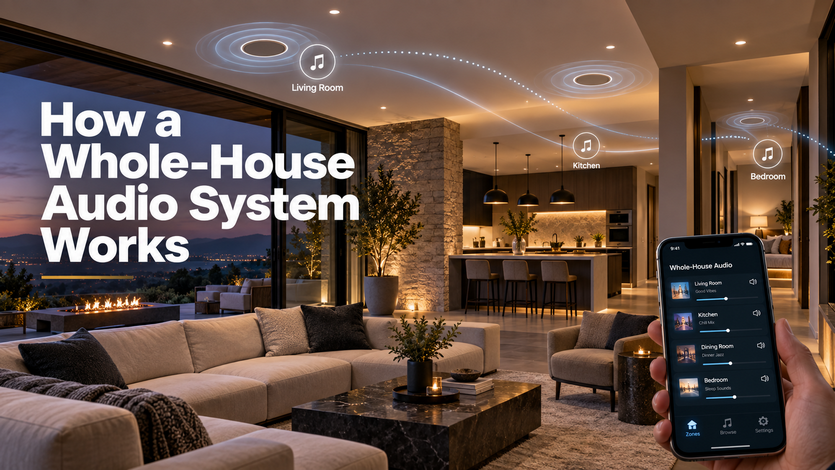
The right solution: Distributed whole-home audio with multi-zone control forms the foundation of this configuration. In-ceiling and in-wall speakers are professionally placed and calibrated for each room's dimensions and acoustic characteristics. A single source or multiple sources playing to different zones simultaneously are managed from a unified control platform. The host adjusts volume, switches sources, or mutes specific rooms without leaving a conversation.

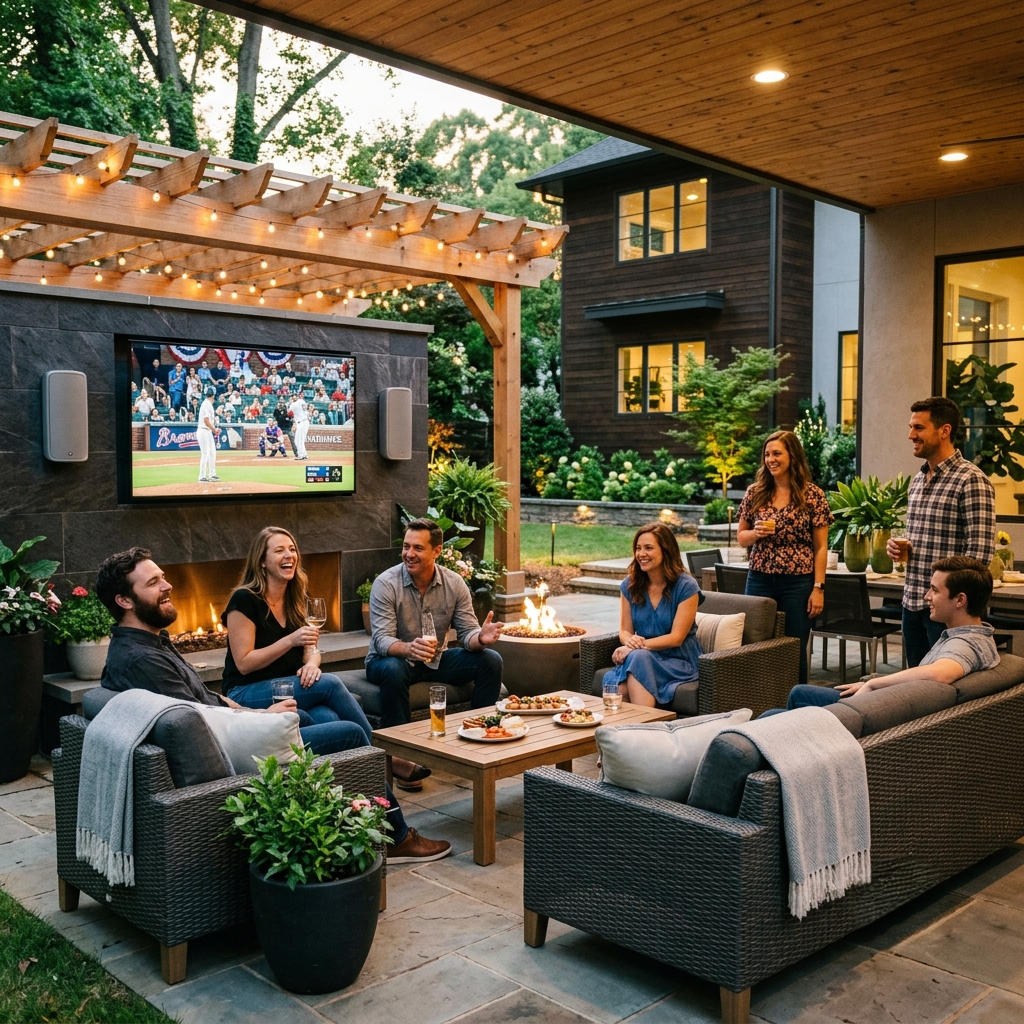
Outdoor speakers extend the entertainment experience to covered patios, pool decks, and outdoor dining areas, and are calibrated for open-air performance. The control architecture works for both guests and hosts: intuitive, reliable, and simple enough to use without a manual.

Continue reading

Home Movie Theater Installation: 7 Decisions Atlanta Homeowners Must Make Before Work Begins

home movie theater installation

Every great home movie theater installation starts long before a single wire is run. The room selection, wiring infrastructure, seating layout, acoustic treatment, lighting zones, and the scope of smart home integration all need to be worked through in advance. Atlanta homeowners who arrive at a design consultation with these decisions already in progress walk away with a better result, achieved faster. Those who arrive without them end up working through avoidable setbacks mid-project.

Whether you are preparing to meet with a professional home theater design team or you are mid-renovation with a closing window to finalize infrastructure decisions, this planning guide covers the seven decisions that shape every successful project.

Decision 1: Which Room, and Does It Actually Work for a Theater?

Room selection is the single most foundational decision in any home movie theater installation, and homeowners consistently underestimate it. The characteristics that make a room perform well acoustically and visually are specific, and the right room is worth identifying early.

Before your consultation, assess the room against these four criteria:

  • Ceiling Height: Is there adequate clearance for in-ceiling speaker placement and a projected image at the proportions you want?
  • Room Geometry: Are the aspect ratio, wall placement, and door and window positions compatible with a clean speaker layout and clear sightlines from every seat?
  • Acoustic Isolation: Does the room soundproof well enough that audio stays within the space, and outside noise stays out during viewing?
  • Can infrastructure access: Power, low-voltage wiring, and HVAC runs reach the room without major structural remediation?

Your design team will assess all of this during the site visit. Homeowners who have already thought it through arrive at a shorter path to a finalized design.

Continue reading

Smart Home Automation: What Atlanta Homeowners Need to Know Before They Invest

smart home automation

Smart home automation is one of the most satisfying home investments an Atlanta homeowner can make. The key is knowing what separates a system that performs flawlessly for a decade from one that creates more confusion within the first year. That difference comes down to five things: how the system is designed, how its components are integrated, how it is installed, how it grows with your home, and how it is supported over time. Atlanta homeowners who understand these five dimensions before they invest tend to make decisions they are glad they made.

The Variable Most Buyers Underestimate

The quality of a smart home automation system is shaped far more by design and integration of individual hardware. A professionally engineered system is built on a unified control architecture where every device, from lighting to climate to security, is selected, configured, and tested to work as one. A consumer-grade setup assembled from individual devices tends to produce inconsistent behavior, multiple apps, and a growing list of workarounds. Atlanta homeowners who know this distinction before they start shopping tend to make investments they are confident in for years to come.

Reliability: A System That Works Every Time

Consumer-grade devices are designed to operate independently. When assembled without professional integration, mismatched communication protocols and the absence of a central control platform produce behavior that is inconsistent by design. Scenes work one day and are silent the next. Troubleshooting means opening multiple disconnected apps.

A professionally designed smart home automation system is built around a unified control platform that manages every connected device from a single, professionally programmed architecture. The network infrastructure is purpose-built for the combined device load. Every scene and automation is calibrated and tested before the homeowner ever interacts with the system. When it performs, it does so completely and consistently because it was engineered to.

Integration: When Everything Works Together

The most common challenge with consumer setups is partial integration. Devices from different manufacturers may technically share a protocol, yet communicate unreliably in practice. The outcome is a collection of separate systems requiring separate interfaces, producing inconsistent behavior in automated scenes, and becoming harder to manage with each additional device.

Continue reading

What Actually Happens When You Hire a Home Theater Design Company in Atlanta

home theater design company

Working with a home theater design company is a straightforward process when the right firm is involved. Most homeowners spend months researching projectors, speakers, acoustic panels, and seating. They know what the finished result should feel like. 

What stays unclear is the journey from "we are interested" to "the system is installed and performing." Who leads the process? What decisions will be made, and when? What does the home look like while the work is happening? This article answers all of it, stage by stage, so the path forward feels clear before the first call is made.

Stage 1: The First Consultation

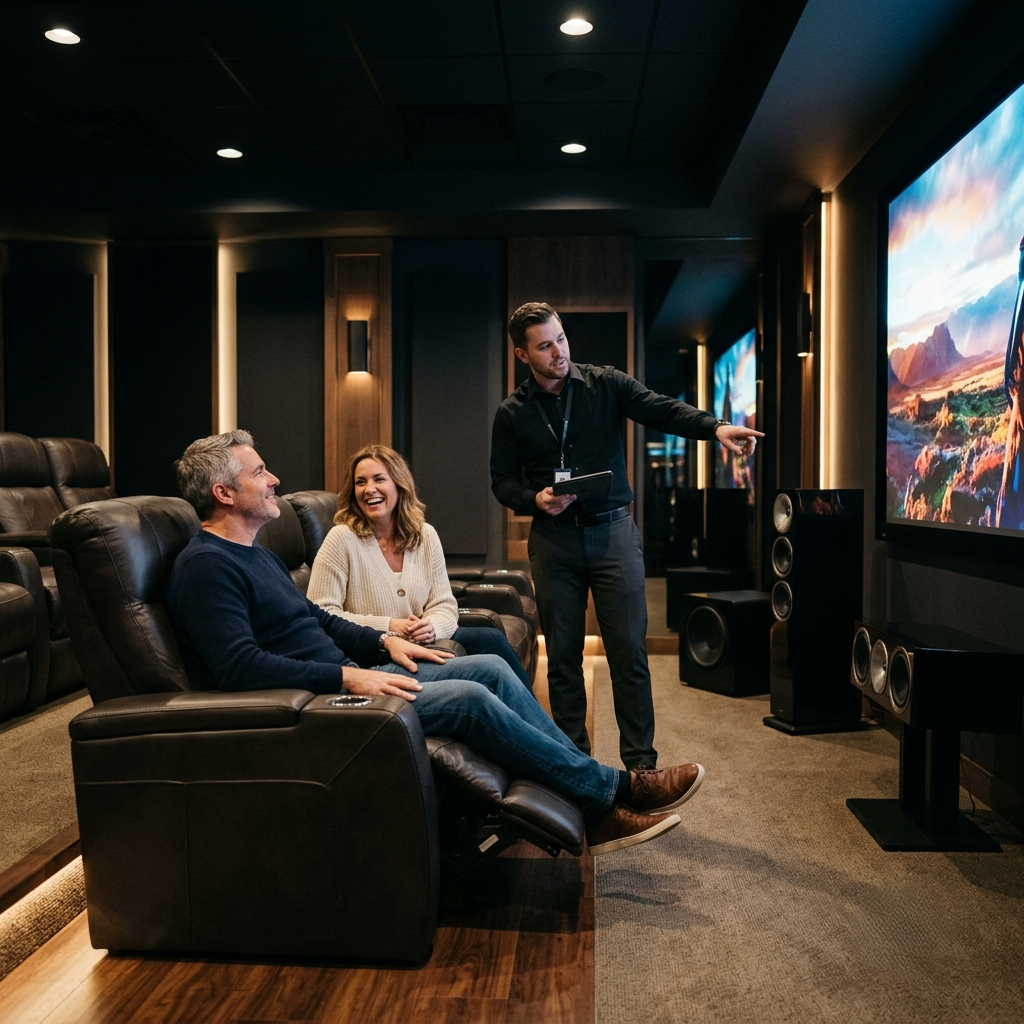
The first consultation with a home theater design company is a professional intake conversation. A qualified designer will spend more time asking questions.

Expect the designer to ask about the room or rooms being considered, the household's primary use cases (movies, gaming, sports, music, or family viewing), the home's existing infrastructure, the budget range, and the project timeline. Any active renovation or construction work, as well as any integration with other home systems, is addressed here, too.

The first meeting is treated as a diagnostic. A professional firm listens carefully to the client's goals and gathers all the information needed to design something that fits. No commitment is required at this stage.

Continue reading

Is Your Home Ready for Professional Audio Video Installations?

aa_20260611-180014_1

Professional audio-video installations go far beyond setting up a screen and some speakers. They touch your home's network infrastructure, wall and ceiling construction, room acoustics, equipment housing, and control systems. 

Homes prepared for this scope of work get faster timelines, cleaner results, and systems that perform as designed. This 10-question assessment tells you exactly where your home stands before the first professional walks through the door.

Why Readiness Shapes the Quality of Your Installation

Most Atlanta homeowners assume the hard decisions come after the consultation. The truth is, the decisions that shape cost and quality happen well before the first site visit.

Whole-home AV integration is an infrastructure project. Distributed audio systems require cable runs through walls and ceilings, a central equipment hub, full network coverage, and a control interface tailored to your household's lifestyle. Smart home automation integrates lighting, shading, security, and climate into a single architecture. Each of those layers has a readiness requirement, and gaps in any one of them create friction and added expense down the line.

The homeowners who get the best results are the ones who arrive informed. This assessment gives you that advantage.

Continue reading

Summer Smart Home Upgrade: What Atlanta's Best Home Automation Installation Services Check Before the Season Starts

home automation installation services

Summer changes how Atlanta homeowners use their homes. More time at home means more use of every system. More entertaining means more guests interacting with lighting, audio, and climate controls. More outdoor time means the pool area, the covered patio, and the outdoor kitchen become primary living spaces rather than occasional ones. And more expectations — from family, from guests, from yourself — mean that the smart home systems that “kind of work” during the quieter months of the year start to feel inadequate.

The best home automation installation services in Atlanta don’t just install systems and disappear. They review, maintain, and upgrade those systems as the client’s needs evolve. This piece covers what a thorough summer review of a home automation system should include — and what the upgrade paths look like for each of the most common shortcomings Atlanta homeowners identify as summer approaches.


What a Summer Automation Review Should Cover

A professional summer review of a home automation system covers seven areas: network infrastructure, control system firmware and programming, lighting control, climate control, audio distribution, AV system integration, and outdoor system performance. Each area has specific items that commonly require attention after a winter of reduced use or that benefit from optimization ahead of intensive summer use.

Network infrastructure is the foundation of every other system in the home. Control4 operates over IP networks, as do Sonos audio systems, smart lighting bridges, thermostat controllers, and streaming devices. A Wi-Fi network with dead zones, an IP address scheme that’s been disrupted by a router reset, or a network switch that’s developed a failing port can create intermittent failures across multiple systems simultaneously — failures that appear to be AV or automation problems but are actually network problems. A pre-summer network review that verifies coverage, updates router firmware, and confirms that all automation devices have stable IP address assignments resolves a significant percentage of the “my system isn’t working right” complaints we receive from Atlanta homeowners in summer.

Continue reading

From Living Room to Luxury Retreat: How Smart Home Entertainment Design Transforms Atlanta Homes Every Summer

home entertainment design

There is a version of home entertainment design that begins and ends with mounting a television to a wall and running an HDMI cable to a streaming device. And then there is a version that begins with a question: what experience do you want to have in this room, and what does the space need to become in order to deliver it?

The difference between these two approaches — and the design philosophy that distinguishes them — is what we’ve been thinking about for nearly 28 years at Atlanta Audio & Automation. The living rooms and media rooms we’ve transformed across Atlanta’s most desirable neighborhoods didn’t become luxury entertainment retreats because of expensive equipment. They became luxury retreats because of thoughtful design that started with the room, the lifestyle, and the experience before it touched a specification sheet.

This piece is about that design philosophy — and about how Atlanta homeowners, particularly during the summer entertaining season when their homes are put to the test, can apply it to create spaces that perform as good as they look.


The Experience Before the Equipment

Every great home entertainment design starts with a conversation about experience, not technology. What does the ideal night in this room look like? Who is in the room — a couple watching films, a family with teenagers, a group of friends for a watch party, all of the above? What’s the primary use case — casual streaming, sports viewing, dedicated movie nights, gaming, music? Is this the only entertainment space in the home, or does it exist alongside a dedicated home theater?

Continue reading

Categories