Call us to schedule a consultation! 770-977-9110 

Home Network Systems That Actually Work in Larger Atlanta Homes

home network systems

Home network systems are the foundation of every smart home. When the network fails, everything else fails with it. Atlanta Audio & Automation has been designing and installing home technology across the greater Atlanta area since 1998.

Consumer routers are built for average homes with average device counts. In larger Atlanta homes across Buckhead, Milton, Alpharetta, and Sandy Springs, the signs appear quickly. Dead zones, sluggish smart devices, and streaming drops during peak evening hours are all symptoms of a network that was never designed for the load it carries.

The fix starts at the architecture level. A purpose-built home network system addresses coverage, capacity, and reliability from the ground up. That is the difference between a network that tolerates your home and one that is built for it.

What Professional Home Network Systems Include

Structured Wiring

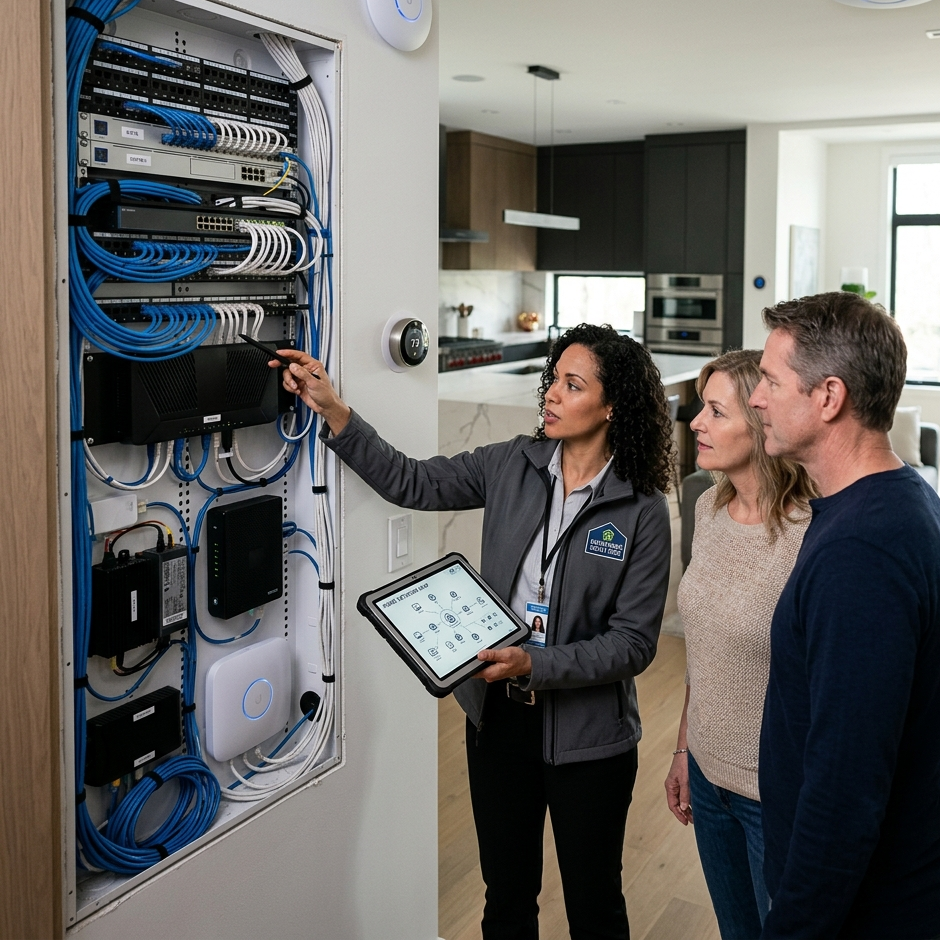
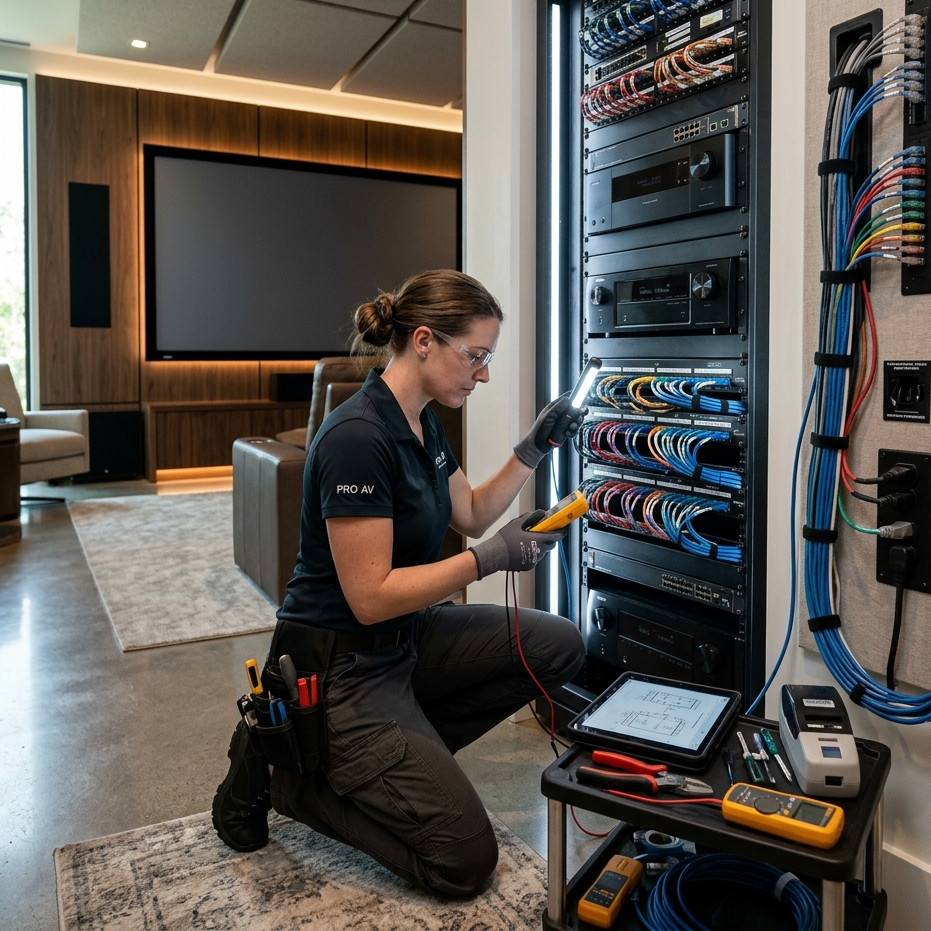
The foundation of any reliable home network system is copper. Category 6 or 6A Ethernet cabling runs to every room and terminates at a central distribution panel. Wired connections remove the interference and bandwidth variability that wireless connections carry. Every device that can be hardwired should be.

Managed Switches

A managed network switch enables traffic segmentation and prioritization. Home theater traffic, including 4K and 8K streaming and high-resolution audio, receives bandwidth priority over background smart home activity. Security cameras operate on their own isolated segment, so their traffic stays separate from everything else.

Continue reading

Home Automation Systems and the Hidden Friction They Erase

home automation systems

Home automation systems are built for the moments you have stopped noticing as burdens. The lights are adjusted, the shades are opened and closed, and the thermostat is adjusted before bed. None of it takes long, yet none of it is nothing either. This is a day-long audit of what that accumulated weight looks like in an Atlanta home, and what a professionally designed whole-home system does about each piece of it.

6:30 AM: The Morning Startup

The morning in a standard Atlanta home starts with a series of small interventions before the household is fully awake. Lights are switched on room by room, window shades remain in last night's position, and the thermostat stays at whatever setting was entered the night before. Each task is trivial on its own, yet together they form the first task of the day.

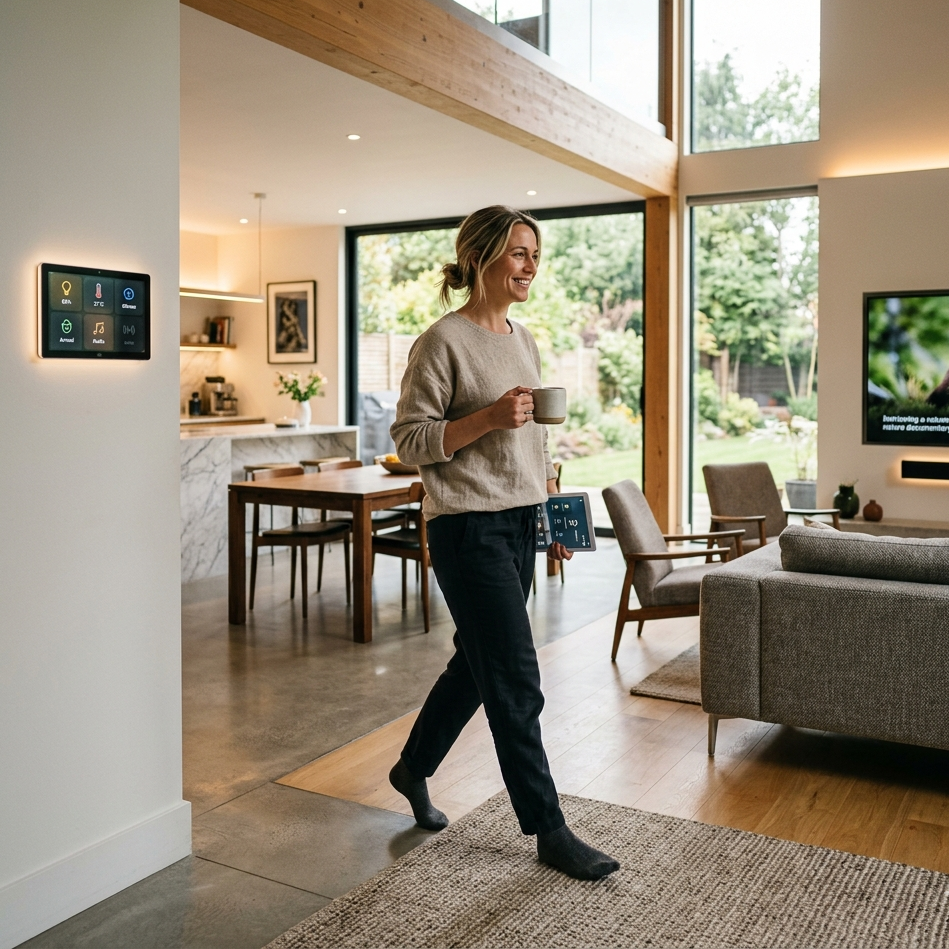
A professionally programmed "good morning" scene changes all of that. Motorized shades rise gradually across the bedroom, allowing natural light to ease the transition from sleep. Lighting in the kitchen and common areas adjusts to a bright morning setting, and the thermostat begins moving toward the household's daytime comfort range.

8:00 AM: Leaving the House

Leaving home for the day often carries a low-grade mental checklist that runs until the car clears the driveway. Are all the lights off? Did the garage door close? Is the security system armed? The drive back to check happens more often.

A "leaving home" scene, triggered by a schedule, a geofence, or a single keypad press, resolves all of that at once. Lights are confirmed off, shades are positioned for the day, and the security system is armed before the front door even closes. The home is set to configured away mode, and the mental checklist has nothing left to run through.

Continue reading

Home Theater Systems in Atlanta: What You Actually Get at Every Investment Level

home theater systems

Most conversations about home theater systems start with components. What projector? What speakers? What screen? The more useful starting point is the total investment and what that investment delivers in daily experience.

Atlanta Audio & Automation has designed and installed home theater systems across the Atlanta metro for nearly 28 years. Every system is designed by CEDIA- and HTA-certified professionals and calibrated to perform at its best in the specific room for which it was built.

The right tier is the one that matches your experience goals.

The Four Tiers at a Glance

Tier

Name

Continue reading

7 Smart Home Systems Myths Atlanta Homeowners Still Believe in 2026 and What's Actually True

smart home systems

Smart home systems have been over-marketed, over-hyped, and flooded with consumer-grade products for over a decade. Atlanta homeowners aged 35 to 65 have encountered conflicting information, low-quality setups, and outdated advice that shaped beliefs about how these systems work. This article clears up the most persistent misconceptions with honest, professional knowledge.

Why These Myths About Smart Home Systems Keep Spreading

Many Atlanta homeowners formed their opinions about smart home systems from a single bad experience or from reading product reviews on consumer tech websites. Some dealt with setups that fragmented over time or relied too heavily on Wi-Fi, which caused the whole system to fail. The beliefs that followed are understandable, and each is worth correcting.

Myth 1: Smart Home Systems Are Only for New Construction

The Myth

A fully integrated smart home must be built from scratch, making it a new-build decision.

The Truth

Smart home systems are installed in existing Atlanta homes every day, whether the home is undergoing active renovation, a light refresh, or is fully finished with zero planned construction. Experienced installation teams design around existing infrastructure using wireless components when wired runs are not feasible, and implement phased strategies that introduce systems without disrupting the household. Many of Atlanta Audio and Automation's most thorough installations have been retrofits in well-established homes across Buckhead, Sandy Springs, and East Cobb.

Waiting for a future build is deferred value, and the right time to start is when a homeowner is ready.

Continue reading

Motorized Shades Are the Smart Home Upgrade Atlanta Homeowners Didn't Know They Needed

motorized shades

Motorized shades are one of the most practical and highest-performing upgrades available to Atlanta homeowners today. They manage heat, block UV damage, create on-demand privacy, and serve as a core component of any well-designed home theater or smart home system. When woven into a whole-home automation setup, they become something greater than window coverings; they become how the home responds to the people living in it. Most homeowners discover this after installation. This article explains it upfront.

Atlanta's Sun Calls for a Smarter Solution

Atlanta summers are long, bright, and relentless. South- and west-facing windows generate enough solar heat to raise interior temperatures by mid-morning, putting added pressure on HVAC systems through the hottest hours of the day. For six months of the year, unmanaged sunlight is one of the biggest factors in how comfortable and how costly a home is to run.

Motorized shades address this with precision. A professionally programmed shading system responds to time of day or solar conditions, lowering to block heat gain during peak hours and rising again as the sun shifts. The home manages its own thermal environment without any input from the homeowner.

This is a functional, measurable contribution to how the home performs during Atlanta's longest and hottest months.

UV Protection That Works Around the Clock

Heat is what homeowners feel. UV radiation is what quietly works against everything inside the home.

Continue reading

Which Home Audio and Video Solutions Are Right for Your Atlanta Home?

home audio and video solutions

Starting with the right question makes all the difference. Many Atlanta homeowners arrive wondering what the best system is, but home audio and video solutions are shaped by how a home is actually used. A household that gathers in one main living room has different needs. A family with young children has different priorities. This guide matches five common Atlanta household situations to the right AV setup so the choice becomes clear.

Why the Right Fit Matters More Than the Best Spec

The most impressive system on paper is only as good as how well it fits the way a household lives. Atlanta homeowners planning a renovation, new build, or major home refresh benefit from understanding what is possible before setting a project scope. A builder, architect, or designer can only plan for what has been decided. Knowing which AV configuration is appropriate for the home makes those conversations easier and the outcome far more satisfying.

Use Case 1: The Social Atlanta Home: Entertaining Across Multiple Rooms

Who this is for: Households that entertain frequently, whether for dinner parties, game days, or holiday gatherings, where the goal is continuous, high-quality audio across the kitchen, living areas, dining room, and outdoor spaces at the same time, with effortless control from anywhere in the home.

The right solution: Distributed whole-home audio with multi-zone control forms the foundation of this configuration. In-ceiling and in-wall speakers are professionally placed and calibrated for each room's dimensions and acoustic characteristics. A single source or multiple sources playing to different zones simultaneously are managed from a unified control platform. The host adjusts volume, switches sources, or mutes specific rooms without leaving a conversation.

Outdoor speakers extend the entertainment experience to covered patios, pool decks, and outdoor dining areas, and are calibrated for open-air performance. The control architecture works for both guests and hosts: intuitive, reliable, and simple enough to use without a manual.

Continue reading

Home Movie Theater Installation: 7 Decisions Atlanta Homeowners Must Make Before Work Begins

home movie theater installation

Every great home movie theater installation starts long before a single wire is run. The room selection, wiring infrastructure, seating layout, acoustic treatment, lighting zones, and the scope of smart home integration all need to be worked through in advance. Atlanta homeowners who arrive at a design consultation with these decisions already in progress walk away with a better result, achieved faster. Those who arrive without them end up working through avoidable setbacks mid-project.

Whether you are preparing to meet with a professional home theater design team or you are mid-renovation with a closing window to finalize infrastructure decisions, this planning guide covers the seven decisions that shape every successful project.

Decision 1: Which Room, and Does It Actually Work for a Theater?

Room selection is the single most foundational decision in any home movie theater installation, and homeowners consistently underestimate it. The characteristics that make a room perform well acoustically and visually are specific, and the right room is worth identifying early.

Before your consultation, assess the room against these four criteria:

  • Ceiling Height: Is there adequate clearance for in-ceiling speaker placement and a projected image at the proportions you want?
  • Room Geometry: Are the aspect ratio, wall placement, and door and window positions compatible with a clean speaker layout and clear sightlines from every seat?
  • Acoustic Isolation: Does the room soundproof well enough that audio stays within the space, and outside noise stays out during viewing?
  • Can infrastructure access: Power, low-voltage wiring, and HVAC runs reach the room without major structural remediation?

Your design team will assess all of this during the site visit. Homeowners who have already thought it through arrive at a shorter path to a finalized design.

Continue reading

Smart Home Automation: What Atlanta Homeowners Need to Know Before They Invest

smart home automation

Smart home automation is one of the most satisfying home investments an Atlanta homeowner can make. The key is knowing what separates a system that performs flawlessly for a decade from one that creates more confusion within the first year. That difference comes down to five things: how the system is designed, how its components are integrated, how it is installed, how it grows with your home, and how it is supported over time. Atlanta homeowners who understand these five dimensions before they invest tend to make decisions they are glad they made.

The Variable Most Buyers Underestimate

The quality of a smart home automation system is shaped far more by design and integration of individual hardware. A professionally engineered system is built on a unified control architecture where every device, from lighting to climate to security, is selected, configured, and tested to work as one. A consumer-grade setup assembled from individual devices tends to produce inconsistent behavior, multiple apps, and a growing list of workarounds. Atlanta homeowners who know this distinction before they start shopping tend to make investments they are confident in for years to come.

Reliability: A System That Works Every Time

Consumer-grade devices are designed to operate independently. When assembled without professional integration, mismatched communication protocols and the absence of a central control platform produce behavior that is inconsistent by design. Scenes work one day and are silent the next. Troubleshooting means opening multiple disconnected apps.

A professionally designed smart home automation system is built around a unified control platform that manages every connected device from a single, professionally programmed architecture. The network infrastructure is purpose-built for the combined device load. Every scene and automation is calibrated and tested before the homeowner ever interacts with the system. When it performs, it does so completely and consistently because it was engineered to.

Integration: When Everything Works Together

The most common challenge with consumer setups is partial integration. Devices from different manufacturers may technically share a protocol, yet communicate unreliably in practice. The outcome is a collection of separate systems requiring separate interfaces, producing inconsistent behavior in automated scenes, and becoming harder to manage with each additional device.

Continue reading

What Actually Happens When You Hire a Home Theater Design Company in Atlanta

home theater design company

Working with a home theater design company is a straightforward process when the right firm is involved. Most homeowners spend months researching projectors, speakers, acoustic panels, and seating. They know what the finished result should feel like. 

What stays unclear is the journey from "we are interested" to "the system is installed and performing." Who leads the process? What decisions will be made, and when? What does the home look like while the work is happening? This article answers all of it, stage by stage, so the path forward feels clear before the first call is made.

Stage 1: The First Consultation

The first consultation with a home theater design company is a professional intake conversation. A qualified designer will spend more time asking questions.

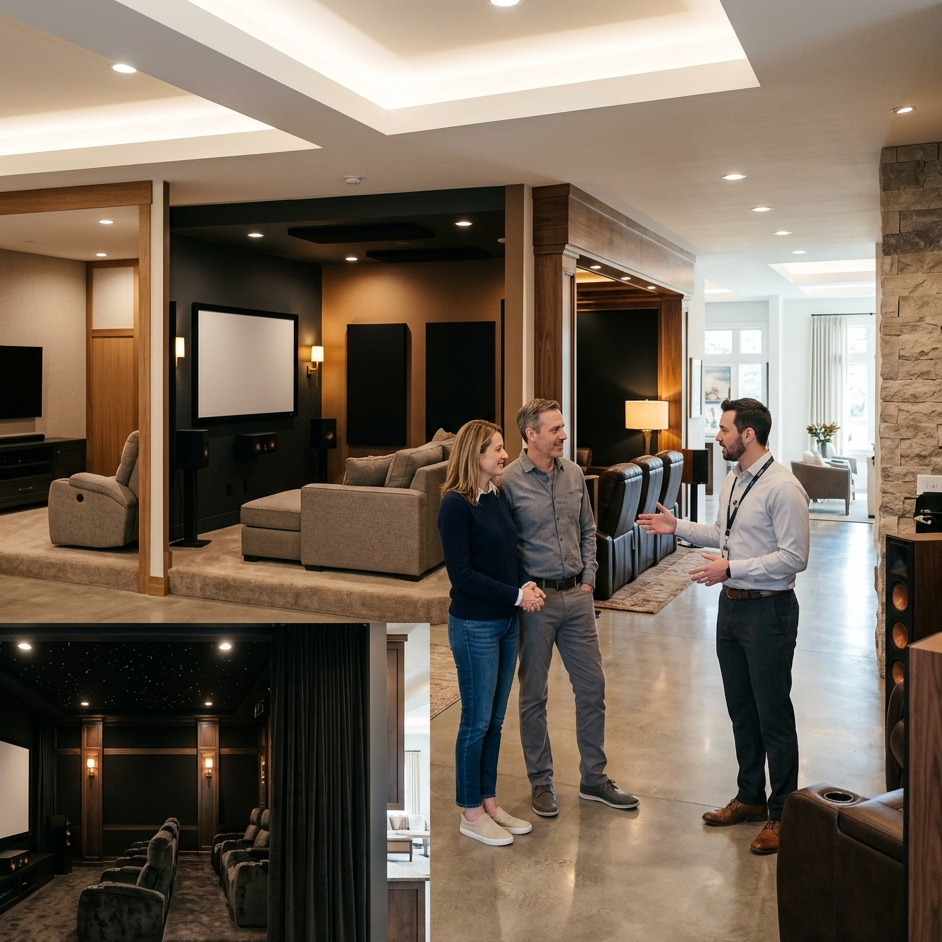
Expect the designer to ask about the room or rooms being considered, the household's primary use cases (movies, gaming, sports, music, or family viewing), the home's existing infrastructure, the budget range, and the project timeline. Any active renovation or construction work, as well as any integration with other home systems, is addressed here, too.

The first meeting is treated as a diagnostic. A professional firm listens carefully to the client's goals and gathers all the information needed to design something that fits. No commitment is required at this stage.

Continue reading

Is Your Home Ready for Professional Audio Video Installations?

aa_20260611-180014_1

Professional audio-video installations go far beyond setting up a screen and some speakers. They touch your home's network infrastructure, wall and ceiling construction, room acoustics, equipment housing, and control systems. 

Homes prepared for this scope of work get faster timelines, cleaner results, and systems that perform as designed. This 10-question assessment tells you exactly where your home stands before the first professional walks through the door.

Why Readiness Shapes the Quality of Your Installation

Most Atlanta homeowners assume the hard decisions come after the consultation. The truth is, the decisions that shape cost and quality happen well before the first site visit.

Whole-home AV integration is an infrastructure project. Distributed audio systems require cable runs through walls and ceilings, a central equipment hub, full network coverage, and a control interface tailored to your household's lifestyle. Smart home automation integrates lighting, shading, security, and climate into a single architecture. Each of those layers has a readiness requirement, and gaps in any one of them create friction and added expense down the line.

The homeowners who get the best results are the ones who arrive informed. This assessment gives you that advantage.

Continue reading

Hi-tech Tailgating! With a Waterproof TV for Outdoor Entertaining

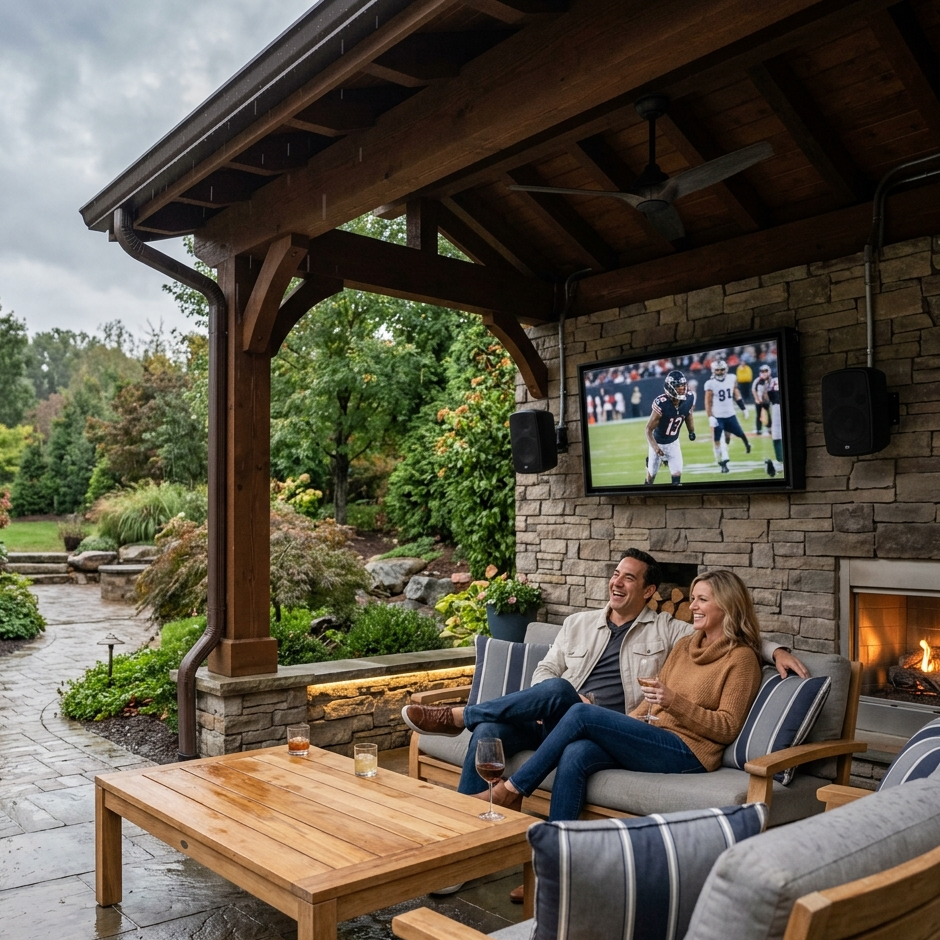
Take a look at this video shown on the TODAY show yesterday.   It was showcasing SunBriteTVs which are the only true outdoor TVs in the world designed and built for all-weather use.  They are designed, engineered and assembled in the U.S.A.

We are a  local authorized dealer of SunBriteTV.   To find out more about these outdoor TVs and other outdoor entertaining options like outdoor planter speakers or rock speakers for your backyard.  Give us a call or make an appointment to come by our show house.

Elan g! Home Automation System's First Installation in the South

There are two distinct approaches -- no, philosophies -- to turning on the lights in Douglas and Lina Leonovicz's Old Metairie home.

Lina accomplishes this task the way most of us would: walking over to a nearby wall and flicking a switch.

Douglas, however, will have none of that manual nonsense. He is far more apt to commune with small, rectangular color touchscreens mounted in the kitchen or front hallway.

Pressing an icon here, sliding a finger there, the retired vascular surgeon can prompt anything from a soft glow to a brilliant glare in whichever space he chooses. He is a Jedi of illumination, rendering a 6,000-square-foot home into a playground for his watt-driven whims and wishes.

It's not just mastery of darkness and light that beguiles Leonovicz, 48, who delights in summoning up music no matter where he happens to be, rock standards thundering forth from speakers installed discreetly in the ceilings.

Continue reading

Summer Smart Home Upgrade: What Atlanta's Best Home Automation Installation Services Check Before the Season Starts

home automation installation services

Summer changes how Atlanta homeowners use their homes. More time at home means more use of every system. More entertaining means more guests interacting with lighting, audio, and climate controls. More outdoor time means the pool area, the covered patio, and the outdoor kitchen become primary living spaces rather than occasional ones. And more expectations — from family, from guests, from yourself — mean that the smart home systems that “kind of work” during the quieter months of the year start to feel inadequate.

The best home automation installation services in Atlanta don’t just install systems and disappear. They review, maintain, and upgrade those systems as the client’s needs evolve. This piece covers what a thorough summer review of a home automation system should include — and what the upgrade paths look like for each of the most common shortcomings Atlanta homeowners identify as summer approaches.


What a Summer Automation Review Should Cover

A professional summer review of a home automation system covers seven areas: network infrastructure, control system firmware and programming, lighting control, climate control, audio distribution, AV system integration, and outdoor system performance. Each area has specific items that commonly require attention after a winter of reduced use or that benefit from optimization ahead of intensive summer use.

Network infrastructure is the foundation of every other system in the home. Control4 operates over IP networks, as do Sonos audio systems, smart lighting bridges, thermostat controllers, and streaming devices. A Wi-Fi network with dead zones, an IP address scheme that’s been disrupted by a router reset, or a network switch that’s developed a failing port can create intermittent failures across multiple systems simultaneously — failures that appear to be AV or automation problems but are actually network problems. A pre-summer network review that verifies coverage, updates router firmware, and confirms that all automation devices have stable IP address assignments resolves a significant percentage of the “my system isn’t working right” complaints we receive from Atlanta homeowners in summer.

Continue reading

Why Summer Is the Best Time to Finally Build Your Custom Home Theatre (And How Atlanta Homeowners Are Doing It Right)

1_20260429-165513_1

Every year, Atlanta homeowners who have been thinking about building a custom home theatre for two, three, sometimes five years finally make the call in summer. And every year, the homeowners who planned their installation for the warmer months end up with a better experience — faster timelines, easier contractor coordination, and the system ready well before the college football season kicks off in late August.

This isn't a sales pitch for summer installation. It's a practical observation from 28 years of building custom home theatres in the Atlanta market. Summer has structural advantages for this type of project that most homeowners don't think about until they're on the other side of a fall installation that stretched into December.

The Summer Contractor Coordination Advantage

A custom home theatre installation is rarely a standalone project. If you’re building a dedicated theatre room — particularly in a basement or a purpose-built addition — the AV installation coordinates with electrical, framing, insulation, and often HVAC. In Atlanta’s fall and winter construction season, the trades are fully booked with projects that started in spring and are trying to reach completion before the holidays. Getting an electrician, a framing contractor, and an HVAC technician to coordinate their schedules around your AV installation in October is a genuine logistical challenge.

In summer, the scheduling math is different. The Atlanta construction market’s busiest period runs from late spring through early fall for exterior and structural work — but the interior finishing trades tend to have more flexibility in June and July than they do in September and October. If your theatre project requires any structural work, electrical panel upgrades, or dedicated HVAC runs, summer is the window where coordination happens with less friction and fewer delays.


Continue reading

What to Look for in Home Theater Designers Before Summer: The Atlanta Homeowner's Checklist for Getting It Right

2

The biggest mistake Atlanta homeowners make when starting a home theater project isn’t picking the wrong projector or underestimating the budget. It’s hiring the wrong designer before any equipment decisions are made. The home theater designer you choose determines the quality of every downstream decision — the room configuration, the equipment selection, the installation quality, the system’s long-term reliability, and the support you receive after the project is complete. Getting this choice wrong is expensive in every sense of the word.

After 28 years of designing and installing home theaters across the Atlanta market, we’ve seen what distinguishes excellent designers from the alternatives. Here is the checklist we’d recommend to any Atlanta homeowner starting this process.


1. Do They Have a Working Showroom You Can Visit?

A home theater is an audio and visual experience. No amount of marketing language, rendered floor plans, or YouTube videos substitutes for sitting in a real room and hearing a real Dolby Atmos system while watching a 4K laser projector at the correct viewing distance. Any designer worth hiring should have a working demonstration space where their equipment and their design approach are on display and available for your evaluation.

If a designer wants to sell you a $50,000 home theater system without showing you what they can build, that’s a red flag. At Atlanta Audio & Automation, we won’t let a client commit to a significant system without visiting our showroom first. We have a working demo theater, a man cave configuration, and a control wall — all operational. The visit typically takes 30–45 minutes and produces more clarity about what a client actually wants than any amount of specification documents.

Continue reading

From Living Room to Luxury Retreat: How Smart Home Entertainment Design Transforms Atlanta Homes Every Summer

home entertainment design

There is a version of home entertainment design that begins and ends with mounting a television to a wall and running an HDMI cable to a streaming device. And then there is a version that begins with a question: what experience do you want to have in this room, and what does the space need to become in order to deliver it?

The difference between these two approaches — and the design philosophy that distinguishes them — is what we’ve been thinking about for nearly 28 years at Atlanta Audio & Automation. The living rooms and media rooms we’ve transformed across Atlanta’s most desirable neighborhoods didn’t become luxury entertainment retreats because of expensive equipment. They became luxury retreats because of thoughtful design that started with the room, the lifestyle, and the experience before it touched a specification sheet.

This piece is about that design philosophy — and about how Atlanta homeowners, particularly during the summer entertaining season when their homes are put to the test, can apply it to create spaces that perform as good as they look.


The Experience Before the Equipment

Every great home entertainment design starts with a conversation about experience, not technology. What does the ideal night in this room look like? Who is in the room — a couple watching films, a family with teenagers, a group of friends for a watch party, all of the above? What’s the primary use case — casual streaming, sports viewing, dedicated movie nights, gaming, music? Is this the only entertainment space in the home, or does it exist alongside a dedicated home theater?

Continue reading

Is Your Home Entertainment System Installation Summer-Ready? The Atlanta Homeowner's Pre-Season Checklist

4_20260429-172302_1

Summer in Atlanta is serious entertaining season. College football watch parties, weekend gatherings around the pool, kids home from school looking for something to fill the afternoons — the demands placed on a home entertainment system in summer are different from the casual daily use the rest of the year brings. Systems that perform adequately for routine use frequently reveal their limitations when the crowd arrives and expectations are higher.

This checklist is designed for Atlanta homeowners who want to identify and address those limitations before the season hits — not during it. It covers the most common points of failure in residential home entertainment system installations, the upgrades that produce the most meaningful improvements, and the decisions that require professional attention versus those you can handle yourself.


Check 1: Assess Your Primary Display's Actual Performance

The television or projector at the center of your home entertainment system has likely been in place for several years. Technology has moved significantly in that time, and a display that was impressive in 2019 may be meaningfully outperformed by current options at the same price point. Before summer entertaining season, it’s worth an honest assessment.

For televisions: Is your current display 4K with HDR support? Does it have HDMI 2.1 ports (required for 4K/120Hz content from current gaming consoles)? Does its brightness hold up in the room’s ambient light conditions during the daytime hours when summer use peaks? A television that looks excellent in a dimmed room at night may wash out entirely when afternoon sun hits the room in summer.

Continue reading

The Complete Guide to Custom Home Theater Design: Everything Atlanta Homeowners Need to Know Before Building Their Private Cinema

33

Custom home theater design is not a single decision. It’s a sequence of interdependent decisions that build on each other — and getting the early decisions right makes every subsequent decision easier and the final result dramatically better. Get the early decisions wrong, and no amount of expensive equipment can compensate.

This guide covers the full design sequence from the beginning: selecting and evaluating the right space, designing for correct acoustics and optics, choosing the projection system, selecting and configuring speakers, planning seating and sightlines, and integrating the theater into a whole-home control system. It’s the same process we follow for every Atlanta homeowner who builds a home theater with us — condensed into a resource you can use to enter the process informed.


Step 1: Selecting the Right Space

Not all rooms make equally good home theaters, and the differences between a good theater space and a challenging one are not primarily about size. They’re about geometry, acoustic properties, and environmental control.

Rectangular rooms are better than square rooms. Square rooms produce severe standing wave problems in the bass frequencies — certain bass notes build up to excessive levels while others cancel almost entirely, creating a response that no amount of equalization can correct. A room with a length-to-width ratio of at least 1.25:1 is significantly easier to treat acoustically. If you have a choice between spaces, the rectangular one wins.

Continue reading

Home Security: Is your home secured for the holidays?

burglar

Burglaries are on the rise in December

You’re not the only one window shopping this season. Every year, there is a rise in home burglaries for the last two weeks of December. That’s because criminals have been peeking through your windows, going through your garbage cans, and waiting for the right opportunity to pounce. And what better time to rob someone than right after Christmas? New TVs, gaming consoles, computers, and other expensive gifts are all left home when you travel for the holidays; or even return to your day job. When you can’t always count on a neighbor or friend to watch your home while you’re away, what can you do? With today’s home security systems, you can keep an eye on your home from anywhere.

Protect your home with Video Surveillance and Smart Security

With the growth in technology, it’s time to upgrade the alarm system. Video surveillance and smart security will give you the ability to peek in on your home from your iPad, iPhone, or Android device. The live video feed will give you access to view who’s at the door, who’s inside your home, and who’s lurking around the perimeter. Forgot to set the alarm when you left? No worries. You’ll be able to arm and disarm the alarm system from your device, even if you’re thousands of miles away from Atlanta. And with only a staggering 13.6% of burglaries resulting in arrests, you’ll be glad you upgraded your alarm system. Burglars leave hardly any evidence behind, making it difficult to find the intruders or your stolen objects. That’s why it’s smart to have video surveillance in your home. You can use the live video feed to alert police if there are intruders in your home. With the capability to record and play back video, you’ll have the evidence to put an end to their ‘shopping spree’. Smart Security and Video Surveillance is a must have in the world we live in today. You wouldn’t browse the web without security on your computer, so why leave your home without an alarm system to thwart the physical criminals.

Protect your home, family, and belongings from the Grinches of the world this holiday season. To learn more about us and our solutions, or to speak with a professional about your needs, visit https://atlantaaudio.com/our-solutions/security-surveillance

Tips on Hiring the Right Home Theater Installer

Select someone locally. Find a professional home theater company within a 50-mile range of your home. You are more likely to have an installer come by and tweak your system, if need be, when you are within a reasonable distance.

 Ask for a link to the home theater installation company's Web site or for some images of recently completed installations. Also, ask to visit the home theater installers' showroom to provide you with living examples of their workmanship. Check our our portfolio. Here at Atlanta Audio we have a 6,000 square foot showhouse that showcases home automation, home theater options, whole house audio, lighting control, media rooms, video surveillance, and much more. Call us today to set up an appointment or visit our website at www.atlantaaudio.com.

Ask for references on finished projects that are similar to what you have in mind for your home theater and are relatively within the same cost range. Ask the homeowner about how the installation company works and how satisfied they are with the finished results. Visit our customer testimonials to get an idea of what our customers say about Atlanta Audio.

Find out how an installer works. For example if you are a neat freak and your professional installer is very proficient in plasma and audio technologies but can seem a little scatterbrained or sloppy, your working styles may not connect.

Before beginning the work that both of you agreed upon, the home theater company should provide you with a complete signed contract that details pricing, equipment specifications, deliverable dates if your project runs in phases and a payment structure. Final payment should always occur upon completion of the project.

Continue reading

Categories