Call us to schedule a consultation! 770-977-9110 

The 6 Questions Every Atlanta Homeowner Should Ask a Home Network Company Before Signing Anything

home network company

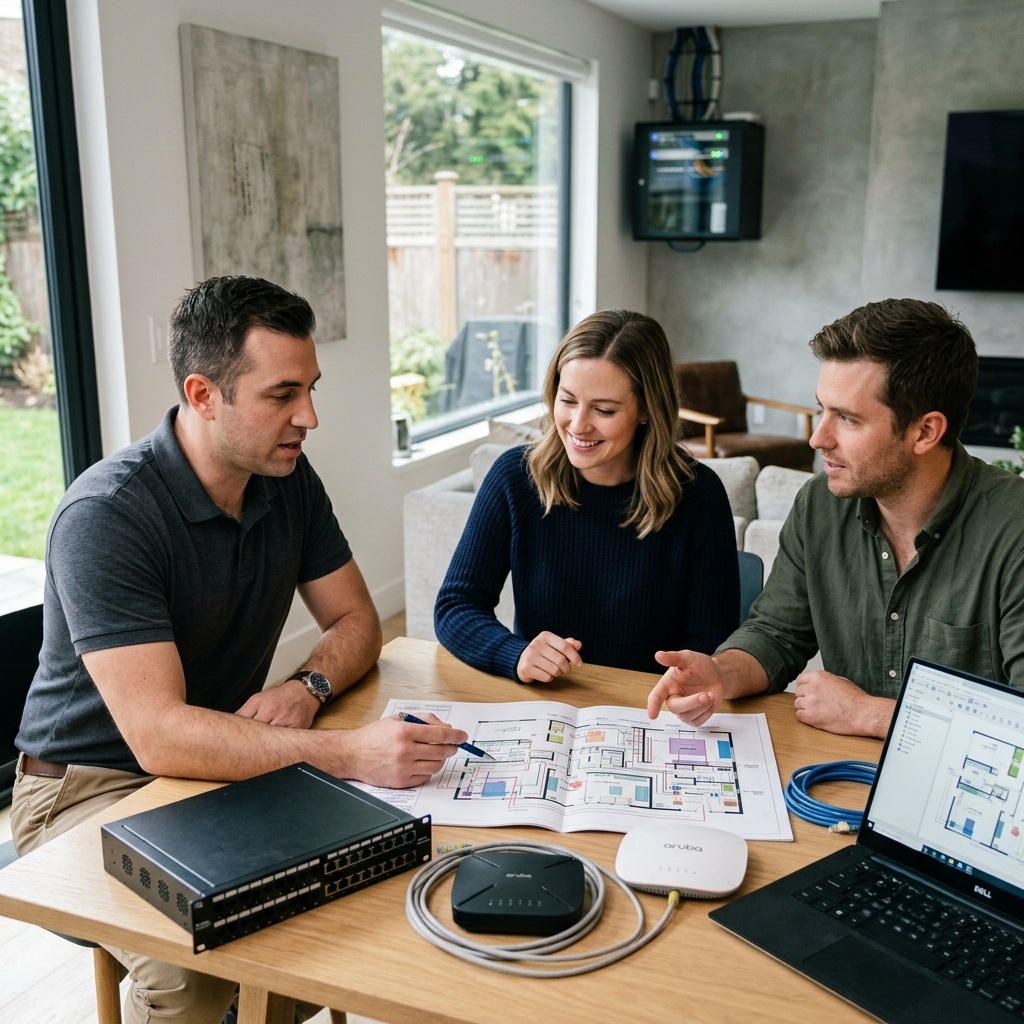
Hiring a home network company can feel confusing when every quote sounds the same. Homeowners across Atlanta want a network that keeps up with smart devices, security cameras, and daily streaming. This guide gives you six clear questions to ask so you can compare companies with confidence.

Many companies use similar words in their proposals, such as full coverage and professional-grade equipment. These words help you compare offers when you know what to ask next. The questions below show you how to see the actual capability behind each proposal.

Understanding What A Home Network Company Should Offer

A strong home network company designs your network around your home. The team studies your walls, your floor plan, and the number of devices you plan to connect. This approach gives every homeowner a network built for daily life.

The right partner listens to your goals, from smart lighting to whole home audio. They test signal strength in every room, including outdoor spaces you use often. This process forms the foundation for the six questions that follow.

Question One: The Value Of A Site Survey

A site survey helps a home network company understand your home's structure before design begins. The team studies wall materials, room layout, and possible interference sources. Atlanta homes built with brick or concrete often require extra planning to achieve a strong signal.

Continue reading

Why the Type of Home Automation Company You Choose Matters More Than the Technology You Choose

AAA_20260713-160549_1

Choosing a home automation company shapes how your smart home performs for years to come. Homeowners often spend weeks comparing platforms, devices, and control systems. The company behind the installation determines the outcome far more than the installation itself.

Every installer fits into one of four groups. Some design complete systems from the ground up. Others place hardware and consider the job finished.

Understanding the Home Automation Company Options

Homeowners meet four kinds of providers when planning a project. Dedicated integrators design and install complete systems as their main craft. Retailers sell devices and add installation as an extra service.

Electricians and contractors add smart features to their regular projects. Assist services connect homeowners with independent technicians for single devices. A true home automation company treats whole home design as the primary craft, so the outcome reflects that focus.

Dedicated Integrators

These companies build systems from an architectural perspective first. Every device serves a plan drawn before installation begins. Homeowners gain systems built to work together for years.

Continue reading

The Security Advantage Most Atlanta Homeowners Don't Realize Home Automation Systems Already Include

AAA_20260713-160043_1

Atlanta homeowners often see home security and comfort as separate. Home automation systems combine both, creating a sense of safety and ease that can be trusted today.

A monitored alarm covers doors and windows. A connected system covers lighting, shading, cameras, locks, and the network that ties them together. Every one of these pieces adds a layer of protection that your household can feel every day.

Home Automation Systems and Home Security Working Together

Home automation systems designed with security in mind cover multiple areas of the home simultaneously. Lighting, shading, cameras, locks, and network protection are managed from a single shared plan. Each part supports the others, so the whole home responds together.

A monitored alarm still watches doors and windows well. A connected platform adds occupancy patterns, camera alerts tied to context, and leak detection across the house. Atlanta households gain a fuller picture of their home at any hour.

Lighting That Feels Like Someone Is Home

Lighting scenes turn lamps on and off in different rooms at different times. Evening patterns shift night to night, so the pattern stays natural. A house lit this way looks lived in from the street.

Continue reading

Why Atlanta Real Estate Professionals Are Starting to Talk About Home Theater Company Installations as a Home Value Asset

home theater company

Atlanta homeowners are asking a good question these days. Does a home theater company installation add value to a home, or does it simply add enjoyment? The answer depends on how the system is designed, built, and documented.

Real estate agents, architects, and interior designers across metro Atlanta are increasingly treating professional installations differently from standard setups. This shift is happening for a reason people can see and measure. Homeowners planning a project want confidence that the investment will retain its value in the home.

What Makes A Home Theater Company Installation A Home Value Asset

A home theater company installation becomes a home asset when it meets four clear standards. It needs coordination with the architect and interior designer, technology that stays hidden from view, and integration with the rest of the home's systems. It also needs documentation that a new owner can rely on for years to come.

These standards separate a system built into the home from one placed inside it. Atlanta's design and real estate professionals notice this difference because it shows in how the room feels and functions. A well-planned theater reads as part of the house, complete from the design stage forward.

Real Estate Professionals Notice The Difference

Atlanta's upscale home market has long treated technology as an afterthought, added only after the design work finished. That view is changing as architects and designers work with certified integrators from the earliest planning stages. The gap between a professional installation and a standard setup has become easy to see.

Continue reading

The Home Theater Systems Decisions Atlanta Homeowners Wish They Had Made Differently and How to Get Them Right the First Time

home theater systems

Home theater systems work best when a few key decisions are made early and with care. Atlanta homeowners who love their finished theaters made these choices well from the start. This guide walks through each decision and shows how to make it work for your space.

The room shapes everything a theater can become. Ceiling height, room shape, and wall distance set the stage for screen size and speaker placement. Deciding whether a room supports the experience you want starts with its geometry.

Home theater systems perform best when the room is chosen for its layout and potential. A design consultation reviews several rooms early and finds the one that best fits the experience you want. This step protects every dollar spent on equipment and treatment in the future.

Building Sound That Works For The Room

Great sound depends on the room as much as it does on the speakers. Hard surfaces and empty walls create echo and uneven tone, even with quality equipment filling the space. Acoustic panels absorb and spread sound so every seat hears music and dialogue clearly.

Home theater systems reach full potential when acoustic treatment is planned alongside the layout. A design team maps panel placement into the room plan from day one. This approach protects the audio investment already made in the space.

Continue reading

How Smart Home Systems Change the Daily Habits of Atlanta Households Without Anyone Having to Think About It

smart home systems

Living with smart home systems feels calm and simple once the technology settles into daily life. Atlanta homeowners often say the systems become part of the background within weeks. Families notice their habits shift in surprising ways.

These changes show up in small moments across the home. Bedtimes shift earlier. Mornings feel calmer, and coming home feels welcoming from the moment the door opens. These shifts follow simple patterns that anyone can understand.

Smart Home Systems Support Earlier Bedtimes

Smart home systems guide the evening through gentle lighting changes. Around nine in the evening, the lights shift from bright task lighting to warm, low light. Families notice they feel ready for rest earlier in the night, and this shift happens through the environment itself.

Light plays a strong role in human rest cycles. Bright light signals energy and alertness, while warm light signals calm. When the home changes light on its own, family members follow that calm signal with ease.

Mornings Feel Calmer With Automation

Homes with programmed morning routines shift lights and climate before anyone wakes fully. This gentle start removes the need for small manual tasks each morning. Smart home systems create this ease through simple automation.

Continue reading

Atlanta's Home Theater Company Landscape: A Buyer's Guide

home theater company

Choosing the right home theater company in Atlanta is one of the most important decisions a homeowner can make for a high-investment project. Atlanta's AV and automation market has grown into four distinct types of providers, each shaped by a different business model, design depth, and approach to long-term service. The type of provider a homeowner selects shapes everything, from how the system is designed to how well it holds up five years after installation.

Why Atlanta's Market Feels Harder to Navigate

A decade ago, the Atlanta AV market offered a relatively clear path for buyers. A handful of certified specialty firms, a few electronics retailers with installation teams, and manufacturer credentials gave homeowners a workable quality signal. Today, the market includes specialty integrators, general retailers, national franchise services, online installation platforms, general contractors offering AV work, and big-box stores with installation departments, all using similar marketing language to describe capabilities that are very different.

The Four Types of Home Theater Company Providers in Atlanta

Understanding the four provider categories gives Atlanta homeowners a reliable framework for evaluating their options. The categories reflect real differences in how each type of firm designs systems, sources equipment, and supports clients over time. Matching the right category to a project's scope is the most effective first step in the selection process.

Category 1: Specialty AV Integrators

A specialty AV integrator is a firm whose entire focus is the design and installation of home technology systems, including home theater, smart home automation, whole-home audio, outdoor AV, and structured networking. These firms employ CEDIA-certified designers who develop custom system architectures tailored to the specific room, the client's goals, and the project's integration requirements. Product selection follows the design, which means every recommendation is grounded in what the space and the client actually need.

Specialty integrators maintain direct dealer relationships with professional-tier manufacturers, which require demonstrated installation quality and ongoing factory training to maintain. Their service model is built around long-term client relationships, with support structures designed to keep systems performing well for years after the original installation. For dedicated home theaters, whole-home integration, or projects where acoustic performance and ongoing support matter, this category is the appropriate choice.

Continue reading

What Atlanta Homeowners Must Consider When Building an Outdoor Entertainment System for the Hottest Months of the Year

outdoor entertainment system

Atlanta summers are intense, and building an outdoor entertainment system that thrives in that heat takes careful planning. The goal is to enjoy a patio, pool deck, or covered lanai with great sound, clear visuals, and seamless control from late spring through September. This guide walks through five essential considerations that help homeowners get the most out of their outdoor setup during peak summer months.

Atlanta Audio & Automation has spent nearly 28 years designing and installing outdoor AV systems across metro Atlanta. We understand the specific demands of Georgia summers, from direct afternoon sun to dense tree cover that shifts the Wi-Fi signal throughout the season. Each consideration below is drawn from real installation experience in the neighborhoods we serve every day.

1. Display Brightness for a Summer-Ready Outdoor Entertainment System

A well-designed outdoor entertainment system starts with a display that stays visible in full Georgia daylight. The key specification is brightness output, measured in nits, which determines how well the image holds up against the surrounding light environment. South and west-facing installations face the most demanding conditions during the peak afternoon hours, so brightness requirements should match the actual sun exposure at the mounting position.

An installer should assess the solar angle at the hours when the space is used most, then specify a display rated for that exact exposure profile. A general outdoor rating covers moisture and temperature, while sun-specific brightness determines visual clarity during the peak viewing window.

Atlanta Audio & Automation evaluates each installation position for its seasonal sun exposure before recommending any display. This approach ensures the screen performs at its best from the first evening of use through the end of summer.

Continue reading

Home Network Systems: The Foundation Every Atlanta Smart Home Needs

home network systems

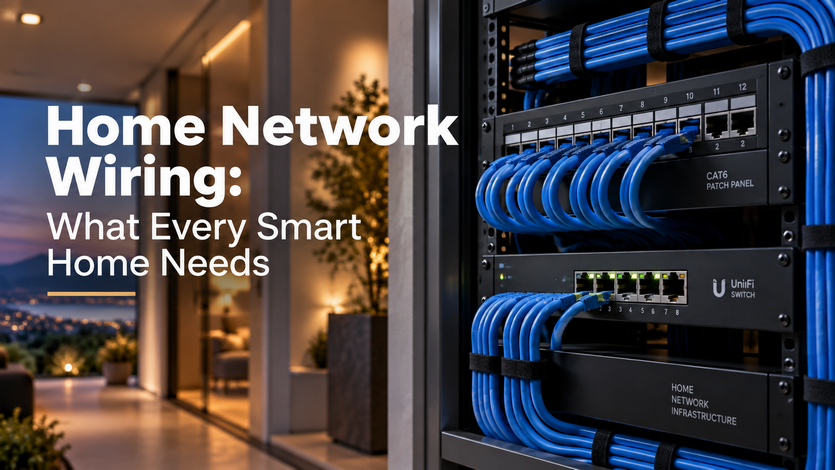
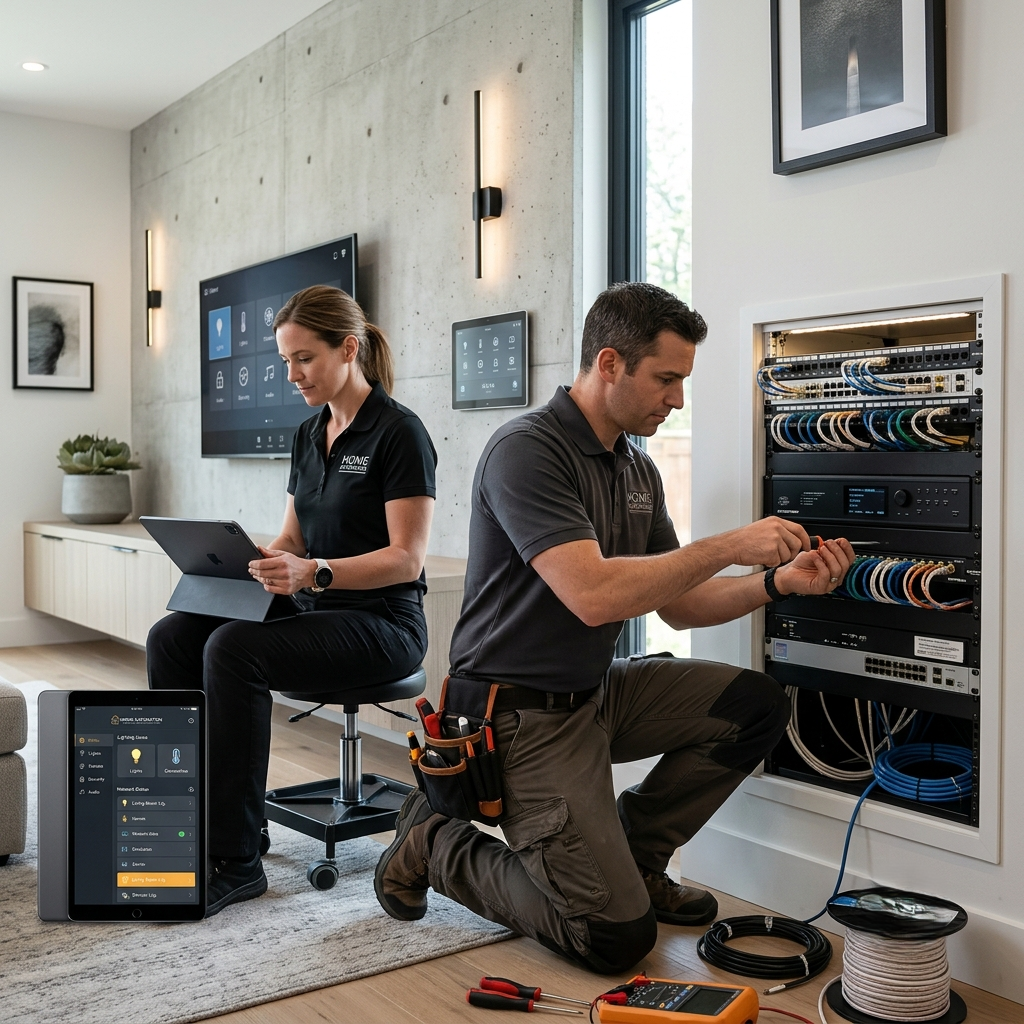
Every smart home system in your Atlanta home runs on your network. The home theater, Lutron lighting, security cameras, and whole-home audio all depend on home network systems designed to handle your home's device load and square footage. When the infrastructure falls short, so do those systems.

The Renovation Priority That Leaves Atlanta Homes Short

Atlanta homeowners invest carefully in their homes. A kitchen renovation that adds real value. A master bath that changes the daily experience. New flooring that makes every room feel current.

What most renovation budgets leave out is the network infrastructure that every connected system depends on. It is the most invisible upgrade in the home. It is also the most consequential one.

Whether the home theater, smart home automation systems, security cameras, or whole-home audio perform as expected depends on this foundation. Strong home network systems are what make every other connected investment work as designed.

What Network Infrastructure Problems Look Like in Real Homes

Atlanta homeowners already recognize these symptoms, though many have attributed them to the wrong cause.

Continue reading

How a Home Automation System Simplifies Life for Atlanta Families

home automation system

A home automation system is one of the most meaningful upgrades an Atlanta family can make to daily life. Many families wonder whether adding this kind of technology will mean more things to manage, update, and handle on their own. A professionally designed whole-home setup is built to reduce that workload and give families more time for what matters.

Atlanta Audio & Automation has been designing these systems for Atlanta families since 1998. We have seen firsthand how the right setup transforms how a home feels and functions every day.

What a Home Automation System Actually Does for Your Family

A home automation system integrates all major functions of the home, from lighting and shading to security and audio, into a single coordinated platform. The household can trigger multiple actions with a single tap, a voice command, or a scheduled routine. Morning lights, the thermostat, window shades, and the security system all respond together without anyone walking through the house to manage each one.

This is the core shift that makes automation so valuable: the home starts working for the family, and the family spends less energy managing the home.

The School Morning That Runs Itself

A weekday morning with school-age children is a compressed, high-pressure sequence of tasks. The lights need to come on in multiple rooms, the thermostat is still on the overnight setting, and the family is already focused on getting out the door on time.

Continue reading

Home Theater Systems Designed for the Space You Actually Have

home theater systems

Many Atlanta homeowners have wanted home theater systems for years, yet they hold back because they assume their space is a poor fit. A finished basement, a bonus room above the garage, or a shared living area can all support a great viewing experience. Every space concern is a design challenge with a clear professional solution.

Atlanta Audio & Automation has been building custom home entertainment experiences across metro Atlanta since 1998, and the team meets these space challenges every day.

Why Atlanta Homeowners Choose Professional Home Theater Systems

Atlanta homeowners often picture a blacked-out, purpose-built screening room when they think of a home theater, and that image holds them back. A dedicated screening room is a great option, but it is far from the only path to a cinematic experience at home.

Home theater systems are designed around the room that exists, whether that room is a finished basement, a bonus space above the garage, or the family living room. Each space comes with its own set of design inputs, which guide every piece of equipment and layout decision.

Working with an experienced installation team means every choice, from display type to speaker placement to lighting control, is matched to what the room can actually do.

Continue reading

How Atlanta’s Weather Puts Smart Home Systems to the Test and What Homeowners Should Know Before They Install

smart home systems

Smart home systems are built to perform in real environments, and Atlanta's environment is specific enough to matter. This city brings sustained summer humidity, intense thunderstorms, occasional winter ice, and rapid temperature shifts that affect every layer of a whole-home installation.

Homeowners who understand these conditions in advance are far better prepared to make informed decisions about their system design.

Why Atlanta's Climate Matters for Smart Home Systems

Atlanta's climate creates planning considerations across every layer of a whole-home installation.

The network infrastructure, outdoor audio and video zones, security and surveillance system, and the smart home control platform all face conditions that go well past "designed for residential use."

A system planned with Atlanta's specific environment in mind will serve a household far better, and that begins with understanding what smart home systems face here every year.

Continue reading

A Room-by-Room Guide to Planning Motorized Shades in Your Atlanta Home

motorized shades

Every room in your home has a different relationship with light, and that is exactly why motorized shades deserve a room-by-room approach.

A bedroom calls for full blackout at night and a gentle rise of light in the morning. A home theater calls for total darkness the moment the film starts. Planning each space on its own terms gives you a system that feels personal, practical, and worth every penny.

This guide walks through the five rooms where motorized window treatments make the biggest difference, the questions worth asking in each space, and how all the individual decisions come together in a coordinated whole-home system.

Why a Room-by-Room Plan Produces Better Results

A whole-home installation planned window by window produces results that feel intentional. Motorized shades installed with a clear room-by-room strategy perform better from day one.

The bedroom has blackout and wake-schedule automation logic that serves no purpose in the dining room. The home theater has lighting control needs that go far beyond those of the living room. Treating each space as its own design problem is what closes that gap.

Continue reading

Why Home Audio and Video Solutions Fail in Atlanta and How Professional Systems Are Built to Last

home audio and video solutions

Every summer, Atlanta homeowners discover that their home audio and video solutions follow a familiar and frustrating pattern. What worked beautifully in May starts showing problems between late June and mid-August. These failures are predictable because consumer-grade outdoor AV products are built for conditions they were never designed to withstand.

Atlanta's climate creates a specific combination of stressors that push consumer products past their limits. Sustained solar radiation, afternoon humidity above 80%, daily thunderstorm cycles, and high pollen loads all work together across a four to five-month season. Understanding these failures clearly is the first step toward choosing a system that holds up season after season.

Why Atlanta Summers Are Hard on Outdoor AV Systems

The Atlanta metro area sits in a climate zone that is uniquely demanding for outdoor electronics. Surface temperatures on sun-exposed displays can climb 20 to 40 degrees above the surrounding air temperature on a typical July afternoon. Speaker components that perform well in drier climates begin breaking down under the combination of heat, humidity, and rapid temperature swings that Atlanta thunderstorms bring.

Consumer product ratings are established in controlled laboratory settings that measure ambient temperature and splash resistance. They are built to handle one variable at a time, and Atlanta throws several at once. Pollen accumulation seals moisture against metal mounting surfaces, Wi-Fi routers reach capacity under peak summer household loads, and speaker surrounds soften and delaminate after repeated thermal cycling.

The homeowners who keep replacing equipment every one to two summers are selecting from a product category that was simply not built for this environment. Professional home audio and video solutions are specified for the actual conditions of the installation site, matched component by component to what Atlanta summers demand.

Continue reading

Home Movie Theater Installation: The Fire Risks Atlanta Pros Prevent

home movie theater installation

A home movie theater installation brings together significant electrical loads, heat-generating equipment, and carefully chosen materials all in one room. Atlanta homeowners who plan this investment deserve to know the specific risks that come with improper setup. This guide covers five safety concerns that professional installers address at the design stage, before work ever begins.

Why Atlanta Summers Change the Safety Picture

Atlanta summers push wall cavity temperatures well past 100 degrees Fahrenheit in July and August. This reduces the margin between safe electrical operation and thermal stress for any home movie theater installation. Equipment cooling systems work harder, and heat dissipates more slowly through walls and ceilings.

Materials that handle normal operating temperatures in cooler months can face greater stress by midsummer. Any installation designed without accounting for these seasonal conditions carries risks that grow with every degree of heat. Planning for Atlanta's climate is part of every professional design process.

Risk 1: Circuits Shared With Other Room Loads

A home theater draws sustained electrical current during every viewing session. Projection systems, amplifiers, AV processors, subwoofers, and network equipment all run simultaneously. When this combined load shares a circuit with other outlets or appliances, the combined draw can push the circuit close to its rated capacity.

Wiring operating at near-capacity generates resistive heat, a well-documented ignition mechanism that builds slowly within walls. In Atlanta summers, that heat dissipates more slowly from wall cavities, narrowing the safe operating margin. Dedicated circuit design, sized to the installation's full load, is a baseline professional requirement for every properly planned home theater project.

Continue reading

What Smart Home Automation Actually Does to Your Energy Bill During an Atlanta Summer

smart home automation

Smart home automation gives Atlanta homeowners a measurable way to reduce summer cooling costs through whole-home coordination. A professionally integrated system with motorized shading, climate control, lighting, and scheduling works together to reduce heat before it builds up inside the home. The difference between this approach and a single smart device is categorical.

Why a Whole-Home System Outperforms a Single Device

A smart thermostat handles the cooling response, and a smart home automation system handles the heating source itself. Every layer of the system shares information and responds to the same environmental inputs simultaneously. That coordination is what produces real efficiency gains across a full Atlanta summer.

When shading, climate, lighting, and scheduling operate as a single system, the thermostat manages a smaller thermal load from the start. The result is shorter cooling cycles, lower runtime during peak hours, and a home that stays comfortable with less energy. Each layer makes the others more effective.

How Motorized Shading Reduces Solar Heat Gain

South and west-facing windows in an Atlanta home admit intense direct sunlight from roughly 10 AM to 4 PM throughout the summer. Solar heat gain is one of the largest contributors to cooling load during the most expensive hours of the day. The HVAC system runs longer and harder cycles precisely when ambient temperatures are at their highest.

A professionally programmed shading system lowers window treatments on southern and western exposures before peak solar hours and raises them again as the sun angle drops. This is a proactive approach that stops heat from entering in the first place. The HVAC system then manages a smaller temperature difference during the most demanding part of the day.

Continue reading

What a Home Theater Design Company Does to Defeat Atlanta's Summer Heat

home theater design company

A home theater design company understands that Atlanta summers are among the most punishing conditions for AV equipment in the country. Peak movie hours fall right during the hottest parts of the day, and equipment racks in media rooms absorb every degree of that heat. Thermal management starts at the design stage, well before any component gets installed.

Why Atlanta Summers Demand a Smarter Design Approach

Every AV component generates heat during operation. Projectors, amplifiers, processors, and networking equipment all generate thermal output that needs a path to the outside. When that heat accumulates inside a rack or enclosed media room, components trigger automatic shutdowns, fan noise climbs, and performance drops.

Atlanta adds extra pressure to this equation. Evening movie sessions and weekend viewing occur during peak ambient-temperature hours in summer. Media rooms, bonus rooms, and basement theaters are often the least aggressively cooled spaces in a home.

A home theater design company treats this as a primary design variable, solved on paper before a single purchase order is placed.

How Rack Engineering Controls Heat at the Source

The equipment rack is where thermal success or thermal failure originates. Professional rack design starts with placement, ensuring the rack is located where air can flow freely around it and conditioned air from the room's supply path reaches the equipment zone.

Continue reading

Audio Video Installations: The Atlanta Homeowner's Summer Timing Guide

audio video installations

Summer is the best season to enjoy a professionally installed AV system in Atlanta, and April is the best time to begin planning audio-video installations. Atlanta homeowners who want outdoor speakers, a home theater build, or whole-home audio ready for summer should be in active consultation by early May. The design, proposal, and scheduling sequence that leads up to any installation takes weeks, and the homeowners who enjoy their systems through the full summer are the ones who started early.

This guide maps the complete audio-video installations calendar to Atlanta's summer entertaining season, phase by phase. Each section shows when decisions need to be made and what happens when planning begins on time.

Quick Reference: Summer AV Timeline

Phase

Target Window

What Happens

Continue reading

What Atlanta Homeowners Should Know Before Choosing a Home Theater Company

home theater company

A dedicated home theater company focuses on the full acoustic and visual design of a room, covering far more than equipment selection. The work includes selecting and configuring components based on room dimensions, acoustic properties, and ambient light conditions. Every element is installed, calibrated, and integrated into one unified system.

A specialist also accounts for how home theater systems connect with the broader home technology. This is the key difference between a custom integration firm and a general AV installer. Asking a firm to describe its design process in specific terms will reveal the depth of its work.

The design process should cover acoustic treatment planning, speaker placement strategy, and calibration methods. A firm that provides clear answers to these questions is operating at the level a homeowner deserves. Service after installation should also be part of the initial conversation.

What Credentials to Verify Before Hiring

CEDIA certification confirms that individual technicians and designers have met tested education standards in home theater installation and design. It is administered independently and reflects a professional commitment to technical growth. This is a good starting point when comparing firms in Atlanta.

HTA (Home Technology Association) certification covers financial stability, proper licensing, insurance, and client protection standards, in addition to technical knowledge. It addresses the business relationship, giving homeowners a broader picture of the firm they are considering. An HTA-certified firm has been vetted on the standards that protect clients.

Continue reading

Outdoor Entertainment System Built for Atlanta Weather: The Engineering Behind a Setup That Actually Survives

outdoor entertainment system

Atlanta puts every outdoor entertainment system through conditions that expose weak engineering within a season or two. The climate here combines sustained summer humidity, intense UV exposure, frequent afternoon thunderstorms, heavy pollen loads, and shoulder season freeze cycles. These are an active stress test for every component in your setup.

What Atlanta's Climate Does to Outdoor AV Equipment

Atlanta's weather creates specific and predictable failure patterns for outdoor electronics. Homeowners across Sandy Springs, Roswell, and East Cobb have watched outdoor displays fog up, speakers deteriorate, and connectors corrode after just a few seasons. These outcomes stem from components and installation practices specified for a generic environment.

A system built to a general "outdoor-rated" label and one built to perform through Atlanta's specific seasonal demands are two different products. Understanding what separates them starts with the engineering decisions made before the first component is mounted. Every failure mode described in this blog is predictable and addressable at the design stage.

The Real Challenge: Humidity and Moisture Intrusion

Atlanta's average summer relative humidity regularly exceeds 70 percent, and overnight condensation occurs even on clear summer evenings as temperatures drop. Moisture that enters speaker enclosures, display housings, or connection points works quietly over months of repeated thermal cycling. Drivers degrade, terminals corrode, and signal integrity weakens, often with no visible warning until performance has already dropped significantly.

Components specified for Atlanta's humidity environment carry verified IP (ingress protection) ratings based on tested performance. Enclosure sealing, gasketed connection points, and marine-grade wiring throughout the signal chain address moisture at every potential entry point. Speaker components with treated surrounds and moisture-resistant cone materials hold up in conditions that accelerate the breakdown of standard materials.

Continue reading

Categories